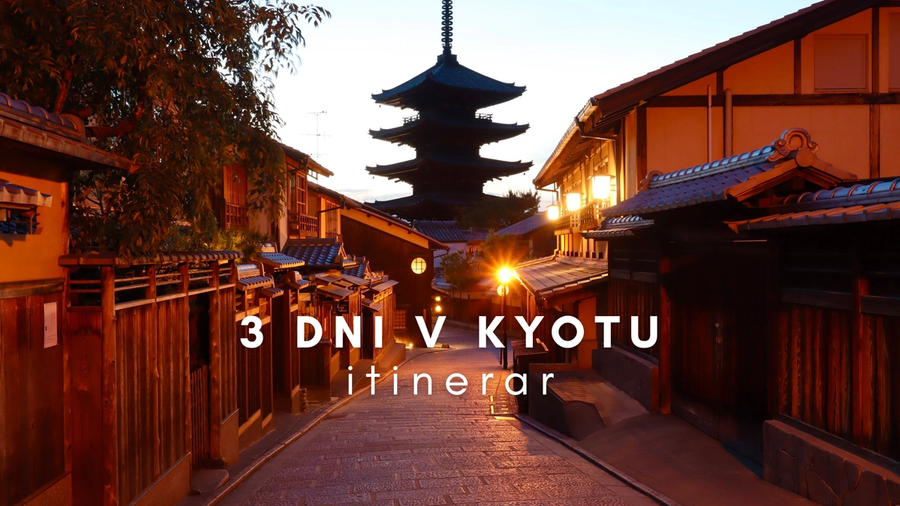
Japan: Kyoto
This page contains affiliate links. If you buy or book through them I earn a small commission at no extra cost to you. I only recommend things I actually use or would use.
👘The beauty of culture in Kyoto (3 days)
Kyoto is one of the most beautiful cities I have ever visited. Of course I'm a little biased, because I was there during cherry blossom season, and that is simply absolutely the most epic thing ever. I split my exploring into three days: one day for the eastern part, one day for the western part and one day (or rather half a day, because of the train schedule) for the sights more in the centre.
🚌Getting around
Kyoto has a JR line that runs across the whole city, but honestly buses were much more convenient for me, as they really go all around the city, between all the sights, and run more frequently. So for Kyoto I suggest an IC card such as Suica or Pasmo, which you top up with money and use to pay for rides. Buses in Kyoto are relatively cheap, as the distances aren't huge either.
🏘️ Accommodation
I suggest finding accommodation somewhere near the main station. That way you are roughly the same distance from all the sights and never have too much travelling. At the same time the station is always close, so you can book seats on the shinkansen for any day trips and for travelling onwards. And of course you don't have to carry your luggage around much or take a taxi.
I stayed at the hotel Sakura Terrace The Atelier – the low-budget option, as you can get a room from just 30€ a night. This is of course not a 5-star hotel, but it is still exceptionally nicely done. The toilets are shared on each floor, and for showering there is an exceptionally well-kept shared bathroom on the ground floor (separate for men and women, locked with a numeric code that only you know) with several shower cubicles, where you also have amenities such as hair ties, cotton pads, cotton buds, combs and razors, 50 different soaps and shampoos, and on top of that they also have a room with a hot pool (an onsen variant).
This content comes from a third-party provider that may set its own cookies and collect data about your visit. We only load it with your consent. More about privacy
Day 1: Central Kyoto
This content comes from a third-party provider that may set its own cookies and collect data about your visit. We only load it with your consent. More about privacy
I only arrived on the first day in the afternoon, so I spent the time on the central part of the city and planned a somewhat less packed schedule.
A general tip: for many of the sights I suggest arriving early in the morning or before sunset. And yes, I understand you can't be at every sight first thing in the morning, especially if they are all in one day 😅 I'm still writing it down because your itinerary will most likely differ from mine, and I want you to know what the options are so you can organise your schedule according to your own priorities.
🏯 Nijō Castle
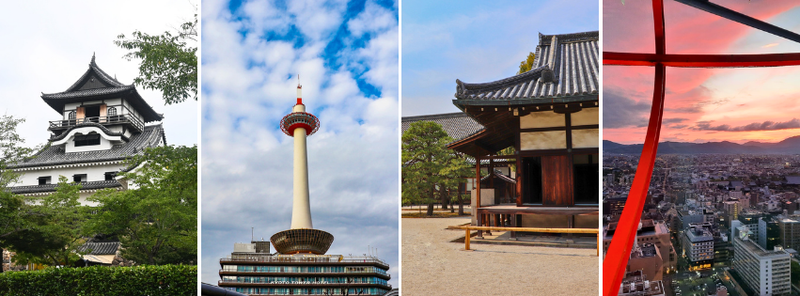
My first stop was Nijō Castle, which has been part of UNESCO World Heritage since 1994. It is a symbol of peace in the Edo period, when Tokugawa Ieyasu unified Japan and laid the foundations for 265 years of stability.
If you are coming from the area around the main station in Kyoto, the easiest option is to take:
- JR Sagano Line to Nijō Station (approx. 10 minutes, included in the JR Pass) - from there it is about a 15-minute walk
OR - the Tozai Line metro to Nijōjō-mae station (not included in the JR Pass)
Nijō Castle was built in 1603 as the residence of the shogun Tokugawa Ieyasu. This is the place where the shogun era actually came to an end.
The floors inside, or “nightingale floors”, creak with every step, designed to warn of intruders. Walking along these corridors is a really special feeling, as if you are part of history.
The whole complex is huge, with gardens, moats and perfectly preserved buildings. Everything feels very calm, almost meditative. I recommend you take your time and don't rush — I spent more than an hour here and didn't regret it.
A few practical tips: It's best to arrive at opening time or just before the afternoon closing, to avoid the biggest crowds. The park around the castle is lovely, especially if the weather is good. Photography is not allowed inside.
- 💴 Price: ~1,300 ¥ for adults (Klook sometimes offers combo tickets)
- 🕒 Opening hours: 8:45–17:00 (last entry 16:00), no reservation needed
- ⏳ Recommended time: 1–1.5 hours
🌳 Kyoto Imperial Palace
The next stop is the former imperial residence, which today is open to the public free of charge. These huge grounds with their greenery and courtyards were once home to the Japanese emperors, and today they serve as a place for walks, relaxation and respect for centuries-old tradition.
The way from Nijō Castle:
- Tozai Line metro → change to the Karasuma Line → Imadegawa station (about 20–25 minutes in total)
- you can also walk (approx. 30–35 min)
This was the official residence of the Japanese imperial family until 1869, when the capital moved to Tokyo. The complex is huge, inside Kyoto Gyoen park, and gives a feeling of complete calm. Compared to Nijō Castle, everything here is more minimalist.
If you are travelling in summer, bring a hat and sunglasses, because there isn't much shade around.
- 💴 Price: free, and you can also join a free guided tour (English ones are usually at 10:00 and 14:00).
- 🕒 Opening hours: 9:00–17:00 (last entry 16:20); in autumn and winter it usually closes earlier, no reservation needed
- ⏳ Recommended time: 45 min – 1 hour. Tip: If you want a quiet visit, come in the morning or in the afternoon before closing, just make sure you also allow enough time for the park and a stroll past the imperial gardens
🐷 Mipig cafe Kyoto
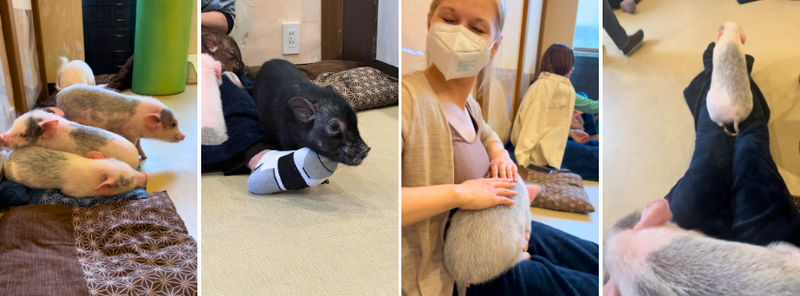
After the sightseeing I had a reservation at mipig cafe – a café with mini pigs. If you love animals and are looking for something different from temples and shrines, this is a really sweet thing to do.
When I walked in, I was given a blanket (so they don't scratch you) and instructions, I sanitised my hands, and then… they literally came and sat on me 😄
They calm down and fall asleep very quickly, even in your lap.
- ⏰ advance reservation required (slots can fill up quickly, I booked several days ahead via Klook)
- 💰 price: 2200 ¥ for 25 minutes, 3300 ¥ for 55 minutes - Klook sometimes has cheaper options and packages where you also get a souvenir
- 🕒 Opening hours: 10:00–20:00, reservation recommended at least 2–3 days in advance
- ⏳ Recommended time: 30–60 min
It's not exactly a café in the traditional style, but it's a cool break and a chance to hang out with animals. The mini pigs are used to people and come right up to you, the environment is clean and tidy, and you get a good opportunity for photos and videos.
It was a kind of “soft reset” in the middle of the trip – a bit of cuddling, a bit of laughter and then back to exploring.
🌇 Kyoto Tower – sunset
In the evening I headed to Kyoto Tower, an observation tower right next to the main railway station. Because I had bought my ticket in advance via Klook, I didn't waste time queuing – which I warmly recommend, especially in season.
The observation deck is at about 100 m height and you can see the whole centre of Kyoto, the mountains in the background and the layout of the city districts, which is especially lovely when the lights come on in the evening. My tip 👉 come approx. 30–45 minutes before sunset to catch the transition from day to night – the city completely changes when the lights come on.
- 💴 price: approx. 900 ¥ for adults
- 🕒 Opening hours: 10.00-approx. 21:00–22:00 (depending on the season), (last entry 20:30), reservation generally not needed, but recommended if you want to catch the sunset
- ⏳ Recommended time: 45 min – 1 hour
After a whole day of walking, this is a kind of “slow” moment to finish, to calm down and get ready for the next day.
Day 2: East Kyoto – temples, pagodas and traditional streets
This content comes from a third-party provider that may set its own cookies and collect data about your visit. We only load it with your consent. More about privacy
On the second day I got up reeeeally early, because I had decided to discover the soul of eastern Kyoto. And given the first place I wanted to see, it was worth getting up early…
⛩️ Fushimi Inari Taisha
One of the most famous spots in all of Japan is Fushimi Inari; a shrine known for its countless orange torii gates that wind like a bright red river around the hill.
From Kyoto Station:
- JR Nara Line to Inari Station (5 minutes, included in the JR Pass)
This is one of the easiest routes in Kyoto — the station is practically in front of the entrance.
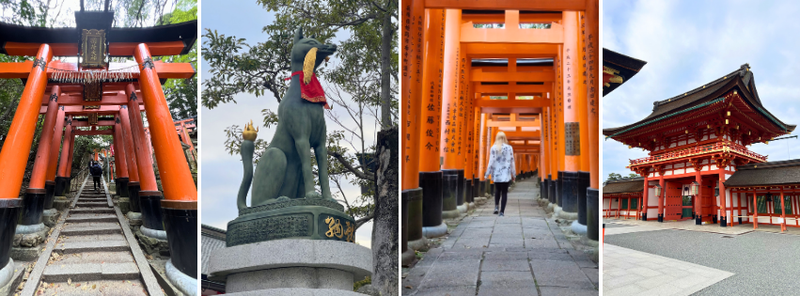
Fushimi Inari is one of the best-known Shinto shrines in Japan, dedicated to the god/deity Inari (god of rice and “prosperity” – I never know how to say that nicely in Slovenian 😅). There are loads of little fox statues, “kitsune”, all around, because foxes are said to be Inari's messengers or couriers.
There is no entrance fee or opening time for the shrine; you arrive and can wander around freely. The red torii gates run all the way up the hill to the top, and depending on how packed your schedule is, you can do a mini hike to the end. The way up takes about 45 minutes + little breaks for photos. The walk can take longer depending on how crowded it is - if you come early in the morning or late in the evening there are fewer crowds, and the higher you go, the more the crowd thins out. Lots of people only go as far as halfway, for their next Instagram profile picture, and then head back. Personally I found the climb to the top fantastic: the higher you go, the more jungle-like the surroundings become, and the torii gates are even more magical and mysterious in the dark, wild forests.
- 💴 Price: free
- 🕒 Opening hours: 24/7, no reservation
- ⏳ Recommended time: 1-1.5 hours for a classic visit, or approx. 2-3 hours for a walk to the top and back
Because I went early in the morning (around 7 am), I had the path almost to myself, and I don't regret the morning eye bags one bit, because the experience was truly superb.
This content comes from a third-party provider that may set its own cookies and collect data about your visit. We only load it with your consent. More about privacy
🏯 Kiyomizu-dera Temple and the Higashiyama area
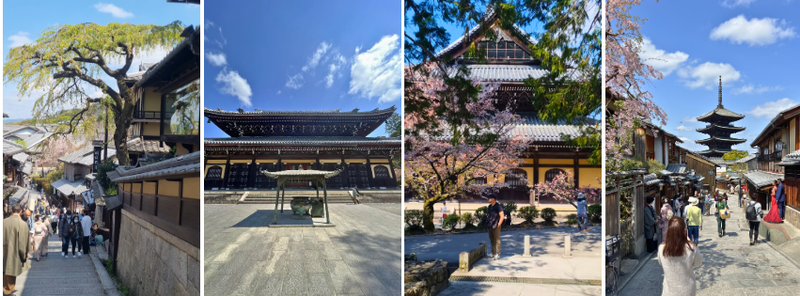
After Fushimi Inari I continued towards the Higashiyama area, known for its steep streets, traditional wooden houses and about a thousand photo-worthy corners.
From Fushimi Inari you can get there in several ways, depending on the time and the season. Google Maps is your best friend, as it has all the timetables and departures very accurate, plus bus numbers and fares. You will very likely have to change once, but the whole journey to Kiyomizu will take you somewhere between 30 and 40 minutes. Make the most of it and find a seat for that time, because from here on we'll be doing a lot of walking 😉
Kiyomizu-dera is definitely one of the icons of Kyoto: one of the best-known Buddhist temples in Japan, founded in 778, with a wide viewing terrace that has stretched out over the city for more than 1200 years.
- 💴 Price: ~¥400–¥500 for adults
- 🕐Opening hours: Approximately 6:00–18:00 (varies by season)
- ⏳ Recommended time: 1–2 hours
- 🌄Tip: Arrive in the morning for fewer crowds or before sunset for incredible views
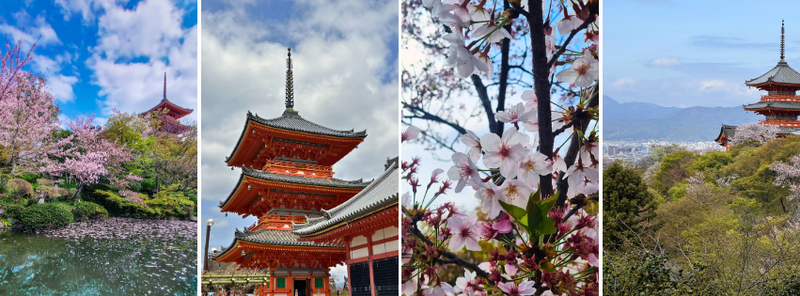
After Kiyomizu I took a circular walk up the steep streets of Higashiyama, where around every corner small shops hid, selling handmade biscuits, mochi, handicrafts and secret viewpoints. Among them also…
🏮Hōkan-ji (Yasaka Pagoda)
On the walk, about 10-15 minutes from Kiyomizu-dera (through Sannenzaka & Ninenzaka) I also visited the Hokan-ji pagoda, an ancient 5-storey Yasaka pagoda that stands in the heart of Higashiyama and is a symbol of the city's everlasting tradition. I'd say it is the most photographed pagoda in Kyoto. And yes, there WILL be loads of people. But the place still has a special energy. If you catch a moment without the crowd, it is almost magical.
Legend has it that the temple goes all the way back to 592, when it is said to have been founded by Prince Shōtoku. The pagoda you see today has been rebuilt several times over the centuries, but it still stands as a symbol of old Kyoto.
This is actually one of the rare cases where you can (if you're lucky) enter the inside of a pagoda and see the wooden structure from within — which is quite rare in Japan. But the interior isn't always open, so don't plan your day around it.
- 💴 Price:
- outside: free
- inside: ~400 ¥
- 🕒 Opening hours:
- exterior: 24/7
- interior: usually ~10:00–15:00 (not always open, no reservation)
- ⏳ Recommended time: 20–40 min (or more for a photo shoot)
✨Kōdai-ji Temple
Then I walked (5–10 minutes) to Kōdai-ji temple, which is known for its gardens and bamboo grove. It is worth visiting for the feeling of inner peace and the excellent architecture. It was built in 1606 in memory of the famous warlord Toyotomi Hideyoshi — it was commissioned by his wife Nene.
If Hōkan-ji is “Instagram Kyoto”, Kōdai-ji is “zen Kyoto”.
When I stepped inside, everything calmed down. The sound of the city disappears, and all that remains are footsteps on gravel, the wind and silence.
- 💴 Price:
- standard: ~600 ¥
- combo ticket (Kōdai-ji + Sho Museum + Entoku-in): ~900–1000 ¥
- 🕒 Opening hours:
- 9:00–17:30 (last entry ~17:00), no reservation needed (except for special evening events)
- ⏳ Recommended time: 1–1.5 hours
👘Yasaka Shrine & Gion
I finished my wandering at Yasaka Shrine, which sits between the main streets of Gion and is a wonderful example of a shrine that is still active and part of the residents' lives. If you can, also stroll through Gion, where in the narrow alleys you can still spot maiko (apprentice geisha) if you're lucky.
Gion is still open to tourists in 2026, but there is an important change you need to know about if you are going to include it in your itinerary.
✔️ The main streets, such as Hanamikoji Street and the area around Yasaka Shrine, are still open and accessible to visitors – you can explore there, admire the traditional wooden houses, visit the little shops and enjoy the atmosphere of the geisha district.
❗️ But there are restrictions:
- Some private streets (especially those where geiko and maiko live or where there are private houses) have been marked as private since April 2024, and tourists are forbidden to enter them
- For the most part these routes are marked with clear signs (“no entry”, “private road”), where entering can also mean a fine of up to 10,000 ¥
- This applies mainly to side streets and inner “roji” paths, not to the main thoroughfares or tourist routes
⚔️ Samurai & Ninja Museum
For a completely different end to the day, I popped over to the Samurai & Ninja Museum, which is located more towards the west.
From Yasaka Shrine, you take one of the many buses to the Shijo Takakura stop and then walk another 5-10 minutes to the location.
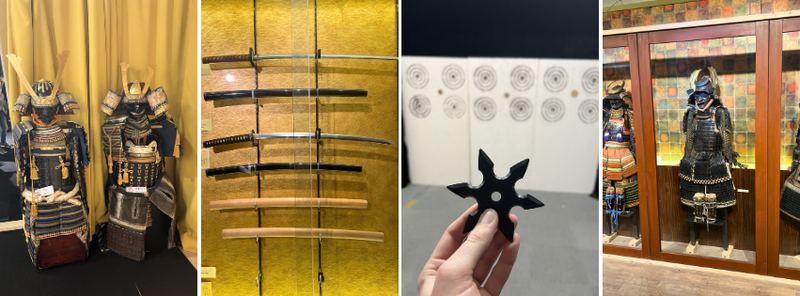
It isn't a huge institution in the sense of “big museums”, but it is very interactive and fun – especially if you want to understand a bit better who the samurai and ninja were beyond Hollywood films. Our guide was really fun, we laughed throughout the whole tour and the experience really stuck with me. At the end they also have a photo corner with props, masks and weapons.
A few highlights from the museum:
- 👘 you see original armour, swords and clothing
- 📚 you get an easy-to-follow insight into the history of warriors without any waffle
- 📸 you can dress up as a samurai or ninja (photos are a must)
- 🥷 the best part: throwing shuriken (ninja stars)
- 💡 booking through their website is cheaper than on the spot
The atmosphere is very relaxed, a bit “touristy”, but honestly — great fun.
- 💴 Price: ~2,500–3,000 ¥
- 🕒 Opening hours: approximately 10:00–19:00
- 📅 Reservation: recommended (1–2 days in advance, especially in high season)
- ⏳ Recommended time: 1–1.5 hours
🌙 Pontocho – evening magic by the river
Evening was approaching and it was time for a good meal with a lovely view. 10-15 minutes on foot towards the east and we're at the last location for the day.
Pontocho is a narrow street right by the Kamo river, known for its restaurants and traditional atmosphere. In the evening it is really something special – the little lights, the wooden houses, that “old Kyoto vibe” that makes you feel for a moment as if you're in a film.
The perfect place to end the day with a stroll, dinner or a drink with a view. Take your time to walk up and down the street, not just to one restaurant – you soon realise that Pontocho is a whole experience, not just a stop for food.
Day 3: West Kyoto
This content comes from a third-party provider that may set its own cookies and collect data about your visit. We only load it with your consent. More about privacy
On the third day I slept in a little more in the morning, as I had a somewhat less packed schedule. The western part of the city is a contrast to the bustle of the city: peaceful gardens, bamboo forests, temples that whisper their history and even a bit of natural animal interaction.
🏯 Kinkaku-ji (Golden Pavilion)
Kinkaku-ji is one of the most recognisable temples in Japan, also known as the “Golden Pavilion” because its walls are gilded.
Route from Kyoto Station:
- bus 101 or 205 to Kinkaku-ji michi (approx. 40–50 min, not covered by the JR Pass)
Alternative:
- JR Sagano Line to Enmachi + bus (a little quicker, but more changes)
I went directly by bus — simple, but a slightly longer ride.
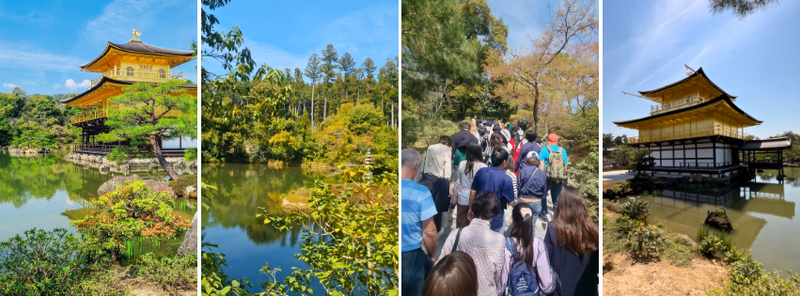
Kinkaku-ji is a Zen temple whose upper two floors are completely covered in gold leaf.
It was originally built in the 14th century as the villa of the shogun Ashikaga Yoshimitsu, and after his death it was converted into a temple. The present building is a reconstruction from 1955 (the original was burned down), but that doesn't diminish its beauty one bit.
This is one of those places you see a million times in pictures… and then you get there and it's even more beautiful. When the temple is reflected in the water, with greenery all around — it really looks almost unreal. But of course, with views like that comes a huge (really huge) crowd of people.
This is not a quiet temple. There are loads of people and it's hard to get a photo with nobody else in it. The route around is therefore one-way. Right as you enter you get the best view (and also the biggest crowd), so don't put off taking photos. For instance, because of the crowd at the beginning I skipped taking photos, thinking “oh, I'll take them later, at the spots with fewer people”, but later there is no longer such a lovely view of the building as at the entrance. So I did an extra lap, through an even bigger crowd. I don't recommend it.
Come as soon as possible after opening (8:30-9.00), still expect crowds, but at least slightly smaller ones.
If you get the chance, also book a tea ceremony somewhere nearby. Kyoto is the capital of matcha and you will definitely get the most authentic experience here.
- 💴 Price: ~500 ¥
- 🕒 Opening hours: 9:00–17:00 (last entry around 16:30), reservations not needed
- ⏳ Recommended time: 45 min – 90 minutes (in the middle of the day the crowds are such that it's hard to control how long you spend there)
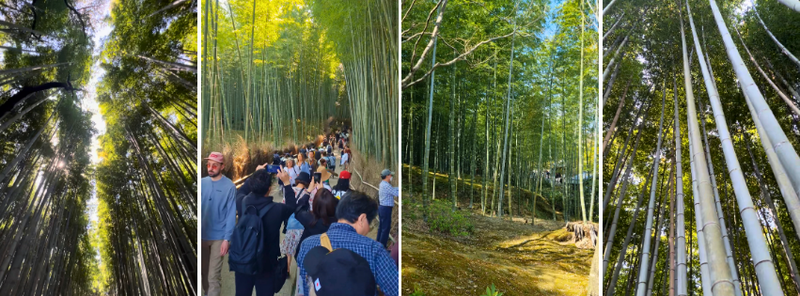
🎋 Arashiyama Bamboo Forest
Slightly further west from Kinkaku-ji lies the Arashiyama Bamboo Grove. In recent years it has become a wildly popular destination among tourists too, so a visit might not be as magical as it looks in all the Instagram reels, but it is still worth seeing. If you want more peace, come early in the morning when the crowds are smaller - the path is free and open 24/7.
- 💴 Price: free
- 🕒 Opening hours: 24/7
- ⏳ Recommended time: 20–40 min
Next to the forest there is also the Sagano Romantic Train (you're sure to come across a poster or advert for it). It is an open-sided little train, a 25-minute ride along the river with views of nature, especially lovely during cherry blossom season and autumn colours. I didn't go on this train myself, firstly because I had things in my itinerary that I wanted to see more, and secondly because the reviews online are quite mixed. If your schedule allows and you want to sit down for a bit and have a snack, then it could be one option. The price is approx. 880¥ for adults.
🛕 Tenryu-ji Temple & Shigetsu
A 5-minute walk from the forest you will find Tenryu-ji - one of the most important Zen temples in Kyoto and part of the UNESCO heritage. It was founded in the 14th century and is famous for its garden, which has been preserved in its original form for centuries. The garden is designed to incorporate the natural landscape and surroundings, and even the mountains in the background become part of the composition.
- 💴 Price:
- garden: ~500 ¥
- interior: an additional ~300 ¥
- 🕒 Opening hours: 8:30–17:00, no reservation
- ⏳ Recommended time: 1 hour
Inside the Tenryu-ji complex there is also a shojin ryori restaurant. This is vegetarian Buddhist cuisine, prepared in a very special way to include the most natural ingredients and simple flavours. They also have vegan menus, but the whole experience is somewhat pricier (~3,000–5,000 ¥ - depending on the menu). If you are interested in thematic, calm and very thoughtful Japanese vegetarian-vegan cuisine, it is worth a visit. I warmly recommend booking in advance, and keep in mind that they are only open from 11:00 to 14:00.
If you don't want the Buddhist lunch experience, in the Arashiyama area you will find Ine and Oku-no-Niwa; two pleasant restaurants that also offer vegan meals.
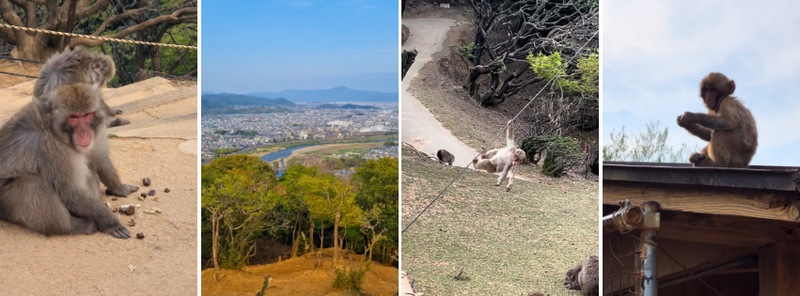
🐒 Iwatayama Monkey Park
After lunch I walked across the river, a 15-20 minute walk, and reached the foot of a small hill, where I bought a ticket for the Monkey Park.
This is not a zoo, but an actual park – it sits on top of a hill surrounded by forest, and the monkeys walk freely around the whole area.
To reach the actual park you first have to get to the top of the hill. So expect a smaller hike, approx. 1.5 kilometres. The path is quite steep, but well kept and wide, and along the way there are also several benches for a stop. It takes around 20-30 minutes to reach the top. Most of the path runs through forest, so on sunny days you have shade, but if it happens to be the rainy season, wear suitable footwear for slippery and muddy terrain.
Once you reach the top you can stay as long as you like (well, until the park closes). The way down is also quicker and less strenuous.
Although the monkeys are small and adorable, don't forget that they are wild animals. All around the park there are also signs with warnings and instructions. The most important thing is that we don't look them directly in the eyes. In the park you can also buy bags of peanuts and apples for feeding the monkeys - but for safety reasons the feeding takes place inside a hut, where the monkeys are separated from us by bars (it's not exactly a cage, the monkeys can freely come and go, the bars are there more for our safety during feeding).
- 💴 Price: ~600 ¥
- 🕒 Opening hours: 9:00–16:00 (last entry ~15:30), reservations not needed
- ⏳ Recommended time: 1.5–2 hours
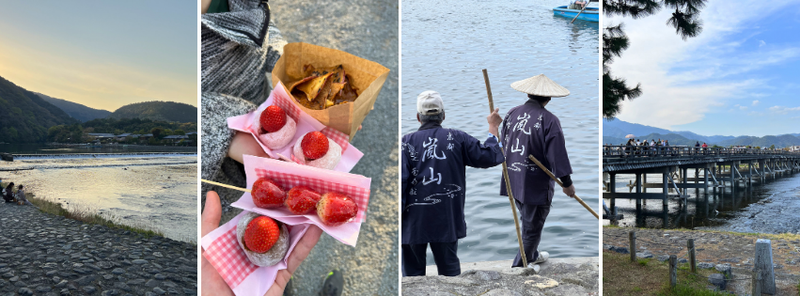
⭐To finish
Before heading back towards home I strolled around a little more. By the river there are lovely paths for walking, and also a few snack stalls for recharging your batteries.
And this is where my itinerary ends. You still have a few hours left in the day that you can spend on any activities I didn't manage to do. A few suggestions: teamLab Biovortex, a Gion workshop where you make your own chopsticks, watching real Japanese sumo bouts, a Kintsugi workshop (those are the gilded cracks in plates), a traditional geisha or maiko show, or going to pamper yourself at a local onsen.
There are of course still loads of activities in Kyoto, but unfortunately my time ran out and I had to head on towards Osaka. For even more activities, check the options on Klook:
This content comes from a third-party provider that may set its own cookies and collect data about your visit. We only load it with your consent. More about privacy
Welcome

Eva Susin
From cooking workshops to discovering vegan corners around the world — food is my biggest passion and brings all my interests together. If you need inspiration for your next meal, have a browse through the recipes. The content might just give you some cravings 😉