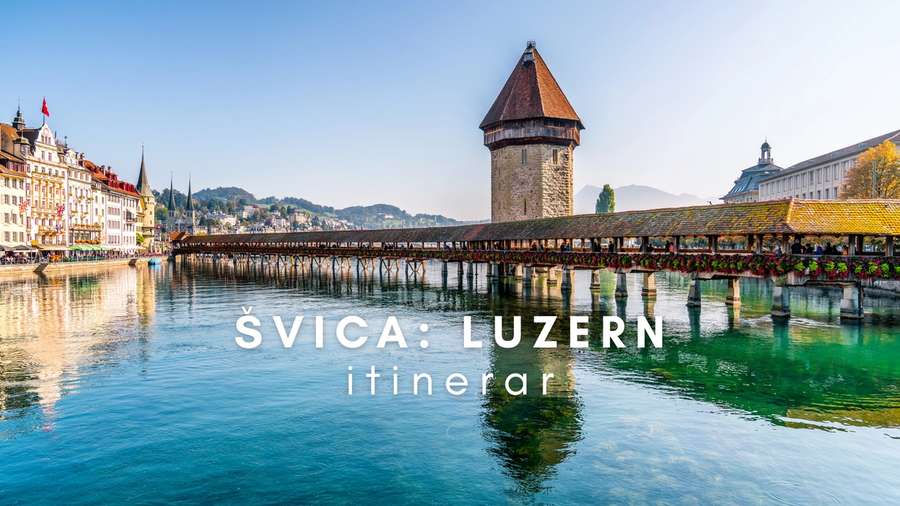
Switzerland: Lucerne
🏔️ Lucerne: a fairytale little town in the middle of the Alps
During my solo trip through Switzerland and France I lived in Basel for a while. When I was looking for places I'd still like to visit and somewhere to go on a day trip, I found that photo I'd already seen 50 times, with an old wooden bridge, mountains in the background and a calm lake… that was Lucerne, and I didn't even know it. And it's an hour away from where I was currently staying? I immediately started writing an itinerary and decided to go on a day trip by train.
And it really didn't disappoint. Lucerne is a small town, but rich in history, culture and views. One day is just right to catch all the highlights – and below I'm sharing exactly that with you: my itinerary for a simple and fun day trip.
This content comes from a third-party provider that may set its own cookies and collect data about your visit. We only load it with your consent. More about privacy
🚆 Getting to Lucerne from Basel
I set off by train, approx. one hour from Basel SBB station to Luzern Hauptbahnhof. The train is direct, with no changes, and you arrive right in the city centre. If you're travelling from Zurich, the journey takes about 40 minutes.
If you're travelling by car, there are quite a few parking options in the centre, everything is available on Google Maps and takes you right to your destination. For the best proximity to the centre I suggest the Kesselturm AG Luzern or Flora Parkhaus car parks, and there is also a huge car park at the railway station (a bit pricier). Prices are up to around 15-20 EUR for 8-12 hours.
The journey by train and by car takes almost exactly the same time (approx. 1 hour from Basel, 40 min from Zurich).
Getting around in town?
Lucerne is small and compact. Everything on this itinerary is reachable on foot; Museggmauer and Gletschergarten require a bit of climbing, but nothing dramatic. As an optional extra I added Pilatus, which I recommend to anyone staying in town for an additional day, and it's the only thing that requires a bus (+ a cable car).
📝 Basic tips before you go
A few things I wish I had known before leaving:
Money: Switzerland is expensive - be prepared for it. Coffee costs from 5 CHF upwards, lunch from 20 CHF. But at least you know in advance. Bank cards are accepted almost everywhere, but a few francs in cash won't go amiss for smaller things. 1 Swiss franc (CHF) is roughly 1 EUR, but not exactly – check the current exchange rate before you leave.
Weather: Lucerne is surrounded by mountains and the weather can change quickly. I was lucky that the day was rain-free, although the sun still played a bit of hide-and-seek. In short, bring a thin jacket. And if you go up Pilatus – it's actually cold there, warm clothes are a must.
Opening hours: Most sights are open from 9 or 10 am, so with a 7-hour day in town you have plenty of time.
🗺️Route map:
This content comes from a third-party provider that may set its own cookies and collect data about your visit. We only load it with your consent. More about privacy
🏘️ Kapellbrücke (Chapel Bridge)
First stop, to avoid the crowds.
Kapellbrücke is the oldest covered wooden bridge in Europe, built in 1333. Together with the octagonal water tower (Wasserturm) in the middle of the river, it is the absolute symbol of Lucerne and one of the most photographed spots in Switzerland. Hanging under the wooden roof are triangular paintings from the 17th and 18th centuries, depicting scenes from Lucerne's history and legends of the saints.
In 1993 the bridge almost completely burned down; the cause was a cigarette carelessly dropped on a boat. Of the original 158 paintings only 30 survived. The bridge was rebuilt in record time and today it looks almost like the original, although most of the paintings we see are reproductions.
Kapellbrücke is on every "must-see Switzerland" list. Visitors agree that it is truly wonderful, but fairly overcrowded at the peaks of the tourist season. For fewer crowds come early in the morning or off-season - that's why I put it first, as soon as I got off the train, because it's less crowded in the morning.
- 🕒 Opening hours: all the time
- 💴 Admission: free
- ⏱️ Recommended time: 30 minutes
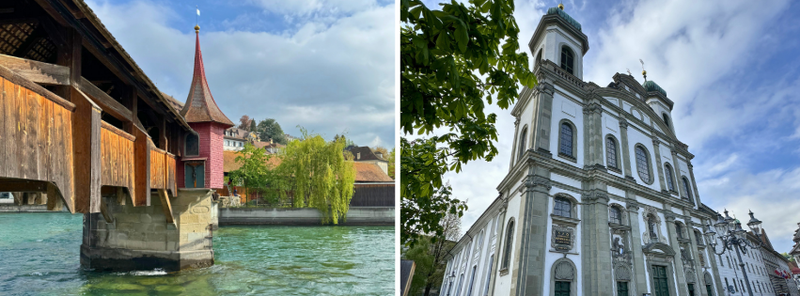
⛪ Jesuit Church (Jesuitenkirche)
The Jesuit Church is the first large baroque church in Switzerland, built between 1666 and 1677. It stands by the Reuss river, just a couple of minutes from the main station, and it's hard to miss – the pink facade with its twin domes is quite iconic. The interior is surprisingly lavish for something so modest from the outside: white and pink frescoes, gilded details and high vaults.
Even though Switzerland is a predominantly Protestant country, this Jesuit church has remained one of the most important Catholic sanctuaries in the country. In the 19th century the Jesuits were even expelled from Switzerland (the political situation), and the church was temporarily turned into a warehouse. Today it is fully in use again.
Most visitors are surprised by the beauty of the interior, since from the outside you don't expect so much splendour. It is often described as a "hidden gem" of Lucerne.
- 🕒 Opening hours: 6:30–18:30 (on weekdays), weekends are slightly different
- 💴 Admission: free
- ⏱️ Recommended time: 20–30 minutes
🌉 Spreuerbrücke (Mill Bridge)
Spreuerbrücke is a covered wooden bridge over the Reuss river, built in the 13th century. It's less well known than Kapellbrücke (which we saw first thing in the morning), but in my opinion just as magical – if not more so, because it's less crowded. The special feature of this bridge is the triangular paintings under the roof depicting the Dance of Death (Totentanz) – a series of 67 paintings from the 17th century that symbolically show death coming for everyone, rich or poor.
The name "Spreuer" comes from the word for chaff – this was the only spot on the river where it was allowed to throw rubbish and chaff into the water. The Dance of Death paintings were created after the plague that devastated Europe, and they were a kind of reminder of the fragility of life.
Travel guides often treat it as the "second" bridge compared to Kapellbrücke, but those who visit it agree that it has a distinctive gloomy and poetic charm that Kapellbrücke lacks. Morbid, yes – but somehow fascinating. The bridge was almost empty and I had it almost to myself.
- 🕒 Opening hours: open all the time (an open-air covered bridge)
- 💴 Admission: free
- ⏱️ Recommended time: 15–20 minutes
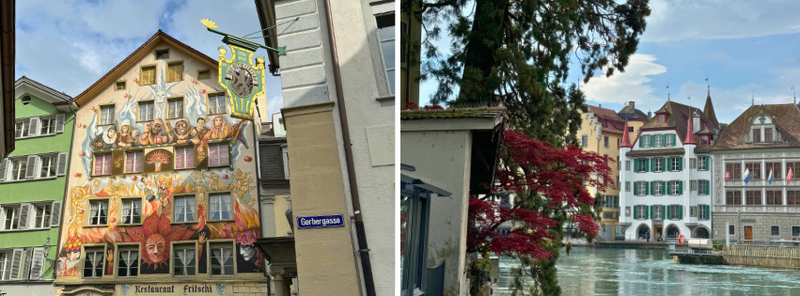
🛍️ A stroll through the old town
The bridge is located in the old town centre, so afterwards treat yourself to a stroll among the colourful cobbled streets. Colourful house facades, stone streets, fountains, cafés with terraces, flowers on the windows. Take some time for a drink with a view, a snack or something sweet. I especially recommend a walk through Kornmarkt (the old grain market), Weinmarkt (the former wine market with especially beautiful frescoes) and Hirschenplatz – all in the centre, reachable on foot.
If you're travelling during holidays such as carnival, Easter or Christmas, there are often parades and big events in town that are really worth seeing. Check in advance what's on while you're travelling.
- 🕒 Opening hours: 24/7
- 💴 Admission: free
- ⏱️ Recommended time: 30–45 minutes + time for lunch
🦁 Lion Monument (Löwendenkmal)
The Lion Monument is a sculpture of a dying lion, carved directly into the living rock in 1821. It is dedicated to the Swiss Guards who fell during the French Revolution in 1792 while defending Louis XVI and his family. The lion lies with a spear sticking out of its chest, yet still protects a shield with lilies, the symbol of the French monarchy.
Mark Twain once described it as "the saddest and most moving piece of rock in the world." And he wasn't exaggerating.
The sculpture is 6 metres tall and 9 metres long. It was designed by the Danish sculptor Bertel Thorvaldsen and carved by Lucas Ahorn. In front of the sculpture there is a small pond that reflects the lion and creates a striking symmetrical composition.
I approached it with no particular expectations and stayed there quite a long time. Something in this scene – the calm of the lion, the trace of the spear, the silence around – lets you know that it isn't just decoration, but also a memorial.
- 🕒 Opening hours: 24/7 (outdoors)
- 💴 Admission: free
- ⏱️ Recommended time: 15–20 minutes
This content comes from a third-party provider that may set its own cookies and collect data about your visit. We only load it with your consent. More about privacy
🧊 Gletschergarten (Glacier Garden)
Gletschergarten is one of the more unusual museums in Switzerland – and one of those that pleasantly surprise you. It spreads over terrain where 20,000 years ago glaciers carved huge hollows into the rock (so-called "glacial potholes"). These 32 hollows (some up to 8 metres deep) were only discovered in 1872 during construction work. Today they are part of a museum that explains the geological history of the area, climate change and natural phenomena.
Besides the hollows, there is also a museum with an exhibition about glaciers and prehistory, a superb old 19th-century mirror maze and a panoramic viewing platform.
Visitors are often surprised by this museum – especially those who aren't particular fans of geology, since everything is presented in a very interactive and interesting way. I don't want to go into too much detail, because part of the experience is not knowing what awaits you.
Plus: the mirror maze is a hit (it's mainly meant for kids, but for me it was top) you really do get lost in it and I went in twice.
- 🕒 Opening hours: April–October 9:00–18:00; November–March 10:00–17:00
- 💴 Admission: adults ~14 CHF
- ⏱️ Recommended time: 1–1.5 hours
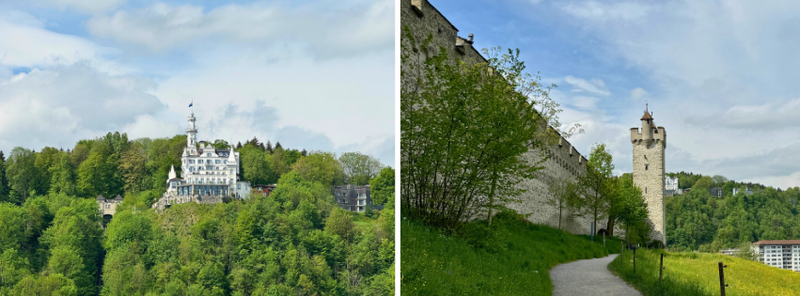
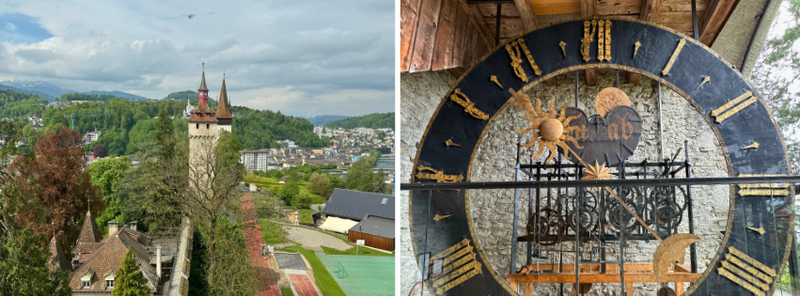
🏰 Museggmauer (City Wall)
Museggmauer is part of the old city wall from the 14th century, winding along the hill above the northern part of the old town. It is approx. 870 metres long, with 9 towers standing along it. As many as three towers can be visited from the inside and climbed to the top for excellent views over Lucerne.
This is one of those sights that's worth including in your itinerary, because many tourist "must-see" lists leave it out and so there are no crowds. Those who know about the wall and climb up are always thrilled by the view and the silence. A good alternative for those who don't want to pay for the pricier viewpoints.
Manzturm (one of the towers) has the oldest clock in Lucerne (from 1535) and even has the privilege of striking each hour one minute before all the other clocks in the city. A tradition that has lasted more than 400 years.
Walking along the wall was one of my favourite parts of the day. Quiet, no crowds, a lovely view of the red roofs of the old town and the blue lake in the background.
- 🕒 Opening hours: April–November, approx. 8:00–19:00 (depending on the season)
- 💴 Admission: free
- ⏱️ Recommended time: 30–45 minutes
🎮 Gameorama
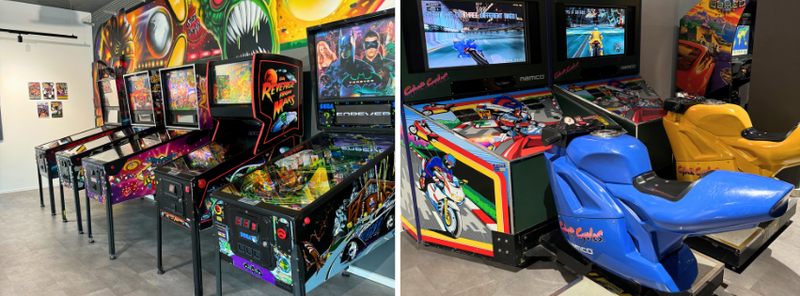
Gameorama is an arcade and a video game museum at the same time – and yes, not exactly a classic tourist spot, but if you know me, you know this is right down my alley. The "museum" houses one of the larger collections of working retro computers and consoles in Switzerland. Most of the things (computers, TVs, consoles, devices, pinball machines) are functional! So they're not just for looking at, but for playing.
Admission is around 12 CHF per person and on entry you get a wristband valid for two hours. Then you can play all the machines without limit, with no tokens and no restrictions. The museum covers the history of video games from the 70s onwards, with interactive exhibits, retro arcade machines and consoles that you really have to try. A top idea for all the nostalgics who grew up with Atari, Sega and Nintendo games, as well as for fans of modern games, pinball machines and arcade-style gaming devices.
Pac-Man, Space Invaders, Tetris, Super Mario, all generations of Game Boy and PlayStation – a great break from walking around town.
- 🕒 Opening hours: Wednesday–Friday, 12:00–19:00, at weekends they open as early as 10:00 (opening hours change throughout the year, so check beforehand!)
- 💴 Admission: adults ~12 CHF; reservations possible online in advance
- ⏱️ Recommended time: 120 minutes
This content comes from a third-party provider that may set its own cookies and collect data about your visit. We only load it with your consent. More about privacy
🚡 Optional: Cable car up Pilatus
This is an optional part that I'd recommend to everyone staying in Lucerne for 2 days or more. For this adventure you need at least 2-3 hours including transport, and if you combined everything into one day it would quickly get overcrowded - and for Pilatus especially you need a bit more gear, since you're heading into the mountains, where it's cold.
Pilatus is a mountain above Lucerne, 2,132 metres high, and an absolute icon of the area. In nice weather the views are simply incredible – on clear days even as far as Mont Blanc.
This time I didn't opt for Pilatus (time and money), but it's on my list for my next trip to Lucerne. Those who have been say the experience is unforgettable – especially if the sky is clear.
From the main station you take bus number 1 (platform A) in the direction of Kriens/Obernau. You get off at the stop "Kriens, Zentrum Pilatus" (approx. 15 minutes' ride). Then you follow the red signs to the station in Kriens (5 minutes' walk) where the gondola to the top is.
💴 Price: ~60 € (return gondola)🧥 Important: This is 2,000 metres above sea level, so dress warmly, it's cold up there.⏱️ Recommended time: at least 2–3 hours (including transport)
This content comes from a third-party provider that may set its own cookies and collect data about your visit. We only load it with your consent. More about privacy
🚆 Wrapping up the trip
I have to admit that Lucerne surprised me positively and smoothly made it onto the list of the best days of this trip. My legs ached just a tiny bit, my phone was full of photos and videos, and my head full of countless lovely memories and views.
It's great because it's small and you can see all the main things in one day. Although there are a few historical stops on the itinerary (which may sound boring), all the locations are truly interesting and interactive, with gorgeous views and well worth a visit.
Thanks for reading this blog, and happy travels! 🏔️
Welcome
Eva Susin
From cooking workshops to discovering vegan corners around the world — food is my biggest passion and brings all my interests together. If you need inspiration for your next meal, have a browse through the recipes. The content might just give you some cravings 😉