Japan: Tokyo
This page contains affiliate links. If you buy or book through them I earn a small commission at no extra cost to you. I only recommend things I actually use or would use.
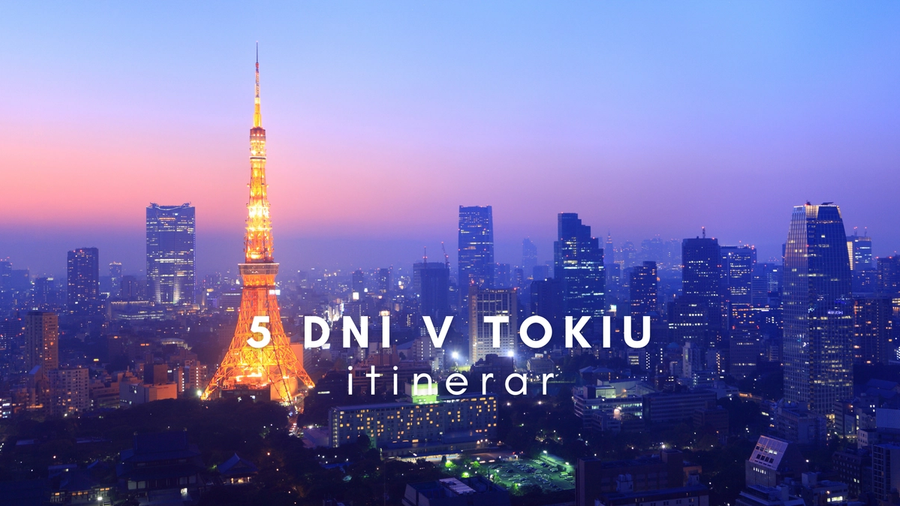
Tokyo, an unforgettable trip through a city where tradition meets futurism. If you are looking for the perfect plan for your trip, below I present a 5-day itinerary that includes temples and Japanese culture as well as gaming centres, shopping and vegan food! Being vegan in Japan is sometimes quite a challenge, although it gets easier year by year. In the itinerary I also share suggestions for vegan meals with you. At the end, a mini guide to public transport and useful information awaits you to make exploring Tokyo easier.
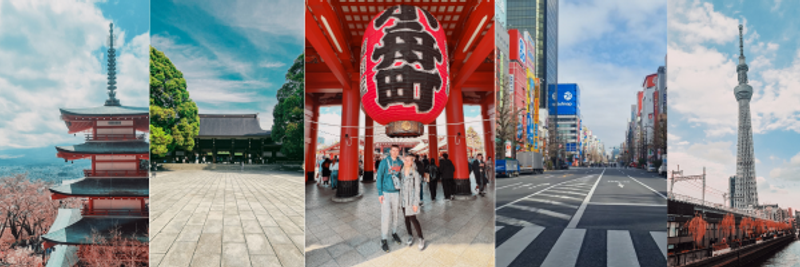
The itinerary is written by days, the way I experienced them, but of course you can swap the days around and arrange them according to your wishes. I grouped the activities by location, so that travel time is as short as possible. In addition, this plan doesn't include nightlife, since we were already quite tired in the evenings from all the activities and had no desire to stay out late. But at the end of every day there will still be a few hours left that you can spend in a bar, at karaoke or in any club you like.
If you want to experience Japanese cuisine the vegan way, you can join me at the Japanese food workshops that take place every year in spring and autumn.
This content comes from a third-party provider that may set its own cookies and collect data about your visit. We only load it with your consent. More about privacy
This content comes from a third-party provider that may set its own cookies and collect data about your visit. We only load it with your consent. More about privacy
Additional information about Tokyo and Japan
The most popular time to visit Japan is spring (March-April) and autumn (September-November). Spring is popular because of the cherry blossoms, which create a fairytale backdrop in parks and temples. In autumn the city comes alive in beautiful red-orange tones, and the temperatures are pleasant for exploring. Because these are the most popular times to travel, you can also expect more crowds at the main attractions.
Klook is an Asian website, similar to Get Your Guide or Tripadvisor, where you can book all sorts of activities and tickets. We booked almost all our activities here, since tickets are often cheaper than elsewhere. You can also book a hotel here or rent a car if you decide to take that step.
Although Japan is a highly developed country, cash still remains important. In Tokyo most shops and restaurants do have a card payment option, but it is still advisable to always carry some yen with you. Especially if you intend to use arcade machines and Gachapons.
The Japanese are known for not being the best at English, but they are extremely kind and ready to help. Honestly, I think that in Tokyo, and especially at the main tourist spots, you won't have any trouble. I recommend always having Google Translate and Google Lens at hand to make it easier to understand the characters.
We stayed at Hotel Tavinos Hamamatsucho, which is extremely affordable and entirely decorated with a touch of manga and comics.
This content comes from a third-party provider that may set its own cookies and collect data about your visit. We only load it with your consent. More about privacy
This content comes from a third-party provider that may set its own cookies and collect data about your visit. We only load it with your consent. More about privacy
Day 1: First impressions of Tokyo – Minato City and Tokyo Tower
Tokyo has two airports – Narita is a bit further from the city than Haneda. After landing, pick up your ordered SIM cards and any JR Pass, then head to your accommodation. Even if you arrive before check-in, most accommodations will take your luggage without any problem and look after it while you explore the city. Don't worry, Japan is one of the safest countries in the world.
Once you drop off your luggage, it's time to explore:
This content comes from a third-party provider that may set its own cookies and collect data about your visit. We only load it with your consent. More about privacy
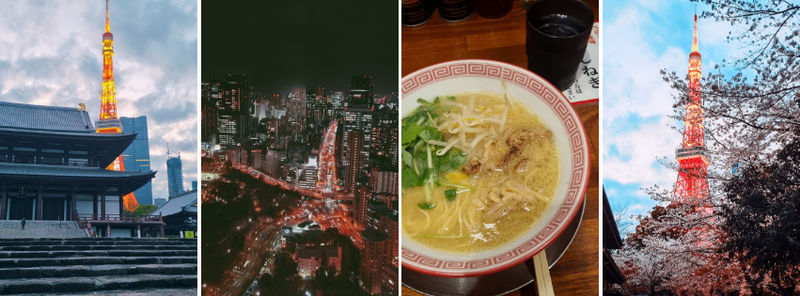
- Tokyo Ramen Tower – the perfect place to experience Japanese culture and, of course, proper ramen. It's a small restaurant that serves ramen and where you can watch the fast-paced business life of Tokyo first-hand. You order ramen right at the machine (including a vegan option!), so you don't have to worry about communication: you just tap your choice, pay and hand the ticket you get to the cook. A great experience of traditional Tokyo ramen restaurants.
- Shiba Park and Zojo-ji temple – one moment you're walking along a busy road, the next a huge Buddhist temple appears in front of you. Zojo-ji is known for its beautiful red gate and stunning architecture, which blends wonderfully with the view of Tokyo Tower in the background. The small park around the temple is a quiet corner in the middle of the city, where you can breathe in some Japanese culture.
- Tokyo Tower – the famous red-and-white tower that offers a gorgeous view of the city. I recommend booking in advance.
- RED Tokyo Tower Arcade – if you too are a fan of gaming centres and arcade games, add this to your bucket list. It's a futuristic world of games and fun, where you can try the latest VR games, interactive e-sports, drone races or simply enjoy nostalgic retro games. You can buy all-day tickets or evening ones.
- (optional, if you have time and energy, at sunset or later) Rainbow Bridge – a wonderful view of the illuminated bridge that connects Odaiba with the rest of the city. A walk across the bridge at night offers incredible views of the city skyline.
More food suggestions nearby: Le Pain Quotidien Shiba Park for brunch or CoCo Ichiban-ya for a tasty Japanese curry experience.
Day 2: Akihabara & Asakusa – Between geek culture and tradition
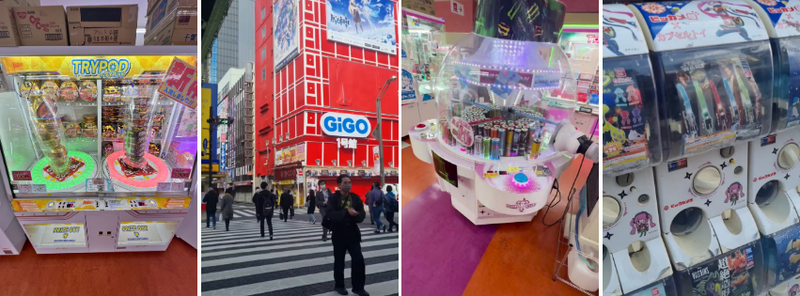
Start the day in Akihabara - a district for lovers of technology, anime and video games. Even if you don't count yourself in this category, Akihabara is something you have to see in person. Tall towers with adverts from Japanese cartoons, arcades at every step, shops with anime merchandise and computer gadgets. Heaven for geeks, weebs and otaku fans, and an equally unique experience for everyone else.
This content comes from a third-party provider that may set its own cookies and collect data about your visit. We only load it with your consent. More about privacy
- Super Potato Center – a retro gaming centre full of nostalgia, where you can try old arcade games and buy (or just look at) rare collectibles such as the first Nintendo Game Boy, rare games and consoles.
- Maid Café – Akihabara is also known for its many “maid cafés”. An unusual but interesting experience, as you are served by girls in maid costumes, and they also put on a fun game or performance. Maid cafés are mostly for locals, since most of the activities are in Japanese, but two places that are a bit more tourist-friendly are @Home Cafe (which also has something for vegans and a better rating on Tripadvisor) and Maidreamin Akihabara Honten.
- Gachapon Hall – those crazy machines with collectible capsules are a Japanese classic. They contain toys, everything from miniature anime heroes to odd Japanese souvenirs. You'll see the machines at every step in Akihabara, but at Gachapon Hall you have so much choice that you're sure to find a good souvenir for yourself or for the people back home.
Next we move to Asakusa; take the Tsukuba Express from Akihabara station – 2 stops (5 min) – to Asakusa Station via exit A1, and then another 6 min on foot to the temple:
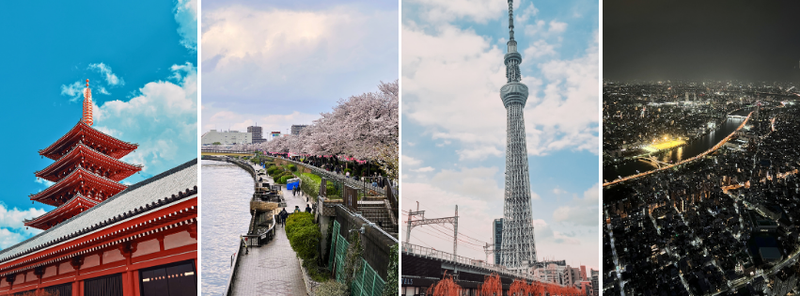
- Senso-ji temple – first head to the oldest Buddhist temple in Tokyo. In front of the temple there is a large bronze incense burner, where visitors can waft the smoke over themselves, as they believe this brings luck and health. For an authentic experience I recommend drawing your own Omikuji too – it costs around 100 yen (0.6€). It works like this: first you draw your number from a box and look it up on the little drawers in front of you. Then you take the sheet from the drawer, which has your fortune for the future written on it.
- Nakamise Street – in front of the temple is the large famous red gate Kaminarimon, which marks the start of a long street with local stalls, where you can try traditional Japanese snacks, local specialities and souvenirs.
- Sumida Park – next comes a walk to the nearby park, which is the perfect place to see the cherry trees in bloom, and which also offers a gorgeous view of the tallest building in Japan.
- Tokyo Skytree – as the tallest building in the country, Skytree offers an incredible panoramic view. Tickets have a set entry time and need to be bought in advance, as there is huge demand. Once you're in the tower, you can stay inside for as long as you like. That's why I suggest visiting at sunset, to experience both the daytime and the night view.
Food suggestion: the vegan restaurant Komaki Shokudo Kamakura Fushikian or a ramen option in Asakusa.
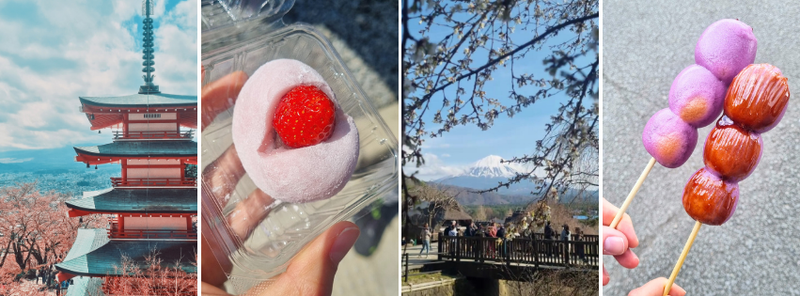
Day 3: Day trip with a view of Mt. Fuji
If you're in Tokyo for several days, visiting Mt. Fuji is almost a must. The easiest way is to pick a day trip through Klook that includes transport and a guided tour of the main sights nearby.
This content comes from a third-party provider that may set its own cookies and collect data about your visit. We only load it with your consent. More about privacy
Day 4: Shibuya and Harajuku – The heart of the nightlife
This content comes from a third-party provider that may set its own cookies and collect data about your visit. We only load it with your consent. More about privacy
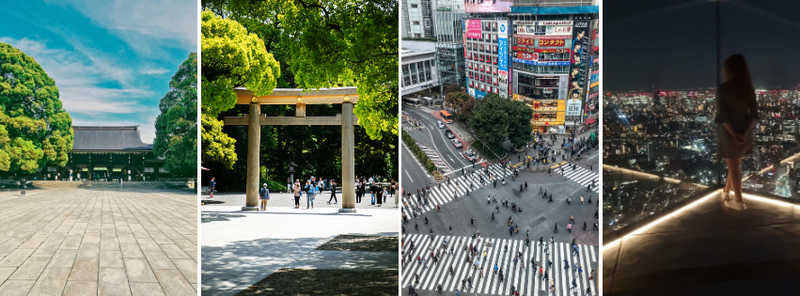
- Yoyogi Park and Meiji Jingu Shrine – Start the day with a walk through one of the biggest parks in Tokyo, which is especially beautiful during cherry blossom season. Meiji Jingu is one of the most important Shinto shrines in Japan and offers a unique insight into traditional culture.
- Takeshita Street in Harajuku – this is the epicentre of youth fashion, full of colourful little shops, themed cafés and sweet Japanese snacks. If you're keen on shopping, set aside some time, otherwise treat yourself to a local speciality.
- Shibuya Crossing – the iconic crossing you've surely seen on TV at some point – but this time you can walk across it yourself and experience that real Tokyo city bustle. At this point, please obey the traffic light! When the red light comes on, don't step onto the road any more, as this is not only disrespectful to Japanese culture, but also dangerous. As tourists we have a responsibility to respect local rules. Around the crossing there are also a number of restaurants and cafés where you can sit down and watch the crossing from another perspective. I warmly recommend a quick coffee or matcha at Starbucks, with a view of the anthill below.
- Nintendo Store & Shibuya 109 – If you're a fan of Nintendo games, definitely set aside some time for the Nintendo Store. We picked up loads of souvenirs and gadgets for home here. For everyone else, I recommend the Shibuya 109 shopping centre, which is the best-known fashion destination in the whole of Tokyo.
- Shibuya Sky – so far we've already visited Tokyo Tower and Tokyo Skytree, and you may be thinking, do I really have to go to yet another viewpoint… and the answer is YES! Shibuya Sky is definitely the best viewpoint and offers a gorgeous view and extremely “Instagrammable” corners. Be sure to book your ticket in advance, and once again I recommend visiting at sunset.
Food suggestion: In the Yoyogi Park and Takeshita area I recommend the 100% vegan restaurant Vegan Bistro Jangara, and Bassanova for ramen. Around Shibuya there's the excellent vegan Izakaya Masaka, so you get an authentic izakaya experience too.
Day 5: Ikebukuro and TeamLab Planets
This content comes from a third-party provider that may set its own cookies and collect data about your visit. We only load it with your consent. More about privacy
- Sunshine City Mall – this is a big, 10-storey shopping centre that houses a bunch of well-known shops such as Ghibli, Disney, the One Piece store, a Snoopy shop and numerous anime-themed boutiques. The centre also has a planetarium, an observatory, an aquarium and an open-air park, and you can also visit various exhibitions or watch a new film at the cinema. I suggest checking the events schedule in advance too; we happened to arrive just when some convention was taking place in the centre and almost all the visitors were dressed up as popular characters. And even though we're not cosplayers, it was really interesting to see in person, especially on the scale the Japanese go about it.
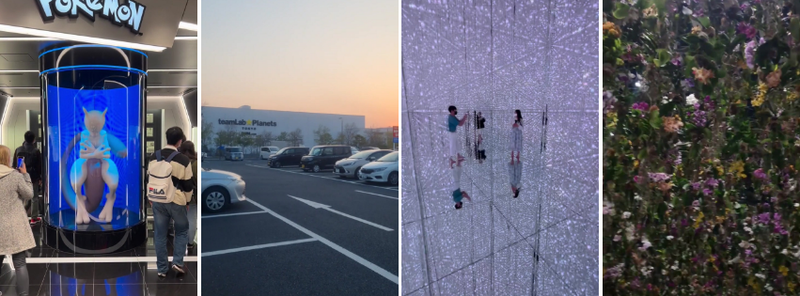
- Pokemon Mega Center – one of the floors in the shopping centre is also a Pokemon Center. As the name suggests, this is a paradise for Pokemon fans, where you can buy exclusive items and take part in interactive activities. Here you'll also find the Pikachu café, which unfortunately had no vegan options yet at the time of my visit.
- Animate Ikebukuro – a 6-minute walk away is a 9-storey shop dedicated to anime and manga fans. If this niche doesn't interest you, I suggest spending more time in Sunshine City Mall, as it's truly huge.
- TeamLab Planets or TeamLab Borderless – booking in advance is a must, because of the high demand. In the afternoon or towards evening, head to the other side of the city to experience the most talked-about adventure in Tokyo. TeamLab has two locations in Tokyo where you can see unique digital art exhibitions, definitely among the best in the world. The attraction is made up of several rooms, and each one has a different experience waiting for you, playing with your senses. I won't say more, as the surprise is part of the experience.
Food suggestion: In Sunshine City Mall they have 2 vegan options – the bakery La Vigne Akiko and vegan Japanese curry at the Coco Ichibanya chain. Near the centre there's also a 100% vegan restaurant, AIN SOPH.Soar. In addition, vegan options are also offered at the restaurant Saffron Ikebukuro and at the university campus International Cafe – Tokyo International University Ikebukuro.
How to find your way around Tokyo? A mini guide to public transport
Public transport in Tokyo is extremely efficient and I often get asked how to find your way around. Here is the basic information that will help you navigate the city more easily:
- Google Maps: let it be your best friend. For every destination it shows you exactly which vehicle to take, the platform, which station, the name of the station exit, travel time and the number of stops, basically everything. Navigating Tokyo really wasn't hard for me, as everything is marked and clearly written in English too. If you get stuck anywhere, there are staff at stations everywhere who are very kind and always ready to help. You can just show them the navigation on Google Maps and they'll point you in the right direction.
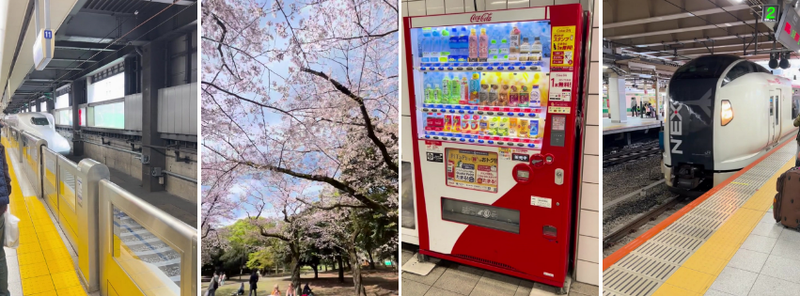
- In addition, the Suica and Pasmo prepaid cards are also very useful, allowing quick and easy payment for rides on the metro and buses, and even in some shops and food/drink vending machines. Similar to our Urbana card (Ljubljana's transport card) – you top it up with money and pay with it. You can also link it to your phone and top it up with a few clicks. Very handy.
- Yamanote Line: the JR circular line in Tokyo that connects the main tourist areas such as Shinjuku, Shibuya, Ueno, Akihabara and Tokyo Station. This is the line you'll definitely use the most in Tokyo.
- JR Pass: If you plan to travel a lot outside Tokyo (Kyoto, Osaka, Nara etc.), the JR Pass is an excellent choice. It includes rides on Shinkansen high-speed trains and local JR lines such as the Yamanote Line, which circles the main areas of Tokyo. A few years ago the JR Pass became somewhat more expensive for tourists, and there is a huge amount of information online about whether it's still worth it or not. So below I'm attaching an approximate calculation of when a JR Pass is actually worth it:
- 7-day JR Pass (¥50,000)
✔️ worth it if you take at least 3–4 longer Shinkansen journeys or >~1,000 km.
❌ not worth it if you only travel between e.g. Tokyo ↔ Kyoto / Osaka and don't go any further.
- 14-day JR Pass (¥80,000)
✔️ worth it if you visit several regions and longer routes (≈ more than 4 longer routes, or you cover > ~1,800 km).
❌ it may not be worth it if you spend most of your time in two or three cities.
- 21-day JR Pass (¥100,000)
✔️ makes sense for extensive tours of all of Japan, 7–9 major cities across different regions or >~2,800 km.
❌ doesn't make sense for regional tours or holidays in a single city. - Shinkansen: For longer journeys between cities, high-speed trains are the best choice. If you don't have a JR Pass, you can buy tickets at machines or at the ticket windows at train stations. The machine guides you through the whole process in English and isn't hard to use.
- Taxi: public transport is excellently organised, so I personally didn't need taxis, but if you decide to explore the nightlife, it will be a great choice for getting around. Quite a few taxi drivers don't speak English, so it's useful to have the address written in Japanese, or to use some AI and a translator on the go.
I hope this itinerary makes planning your trip easier, and that I've given you some idea or a new activity you can try.
This content comes from a third-party provider that may set its own cookies and collect data about your visit. We only load it with your consent. More about privacy
This content comes from a third-party provider that may set its own cookies and collect data about your visit. We only load it with your consent. More about privacy
Welcome

Eva Susin
From cooking workshops to discovering vegan corners around the world — food is my biggest passion and brings all my interests together. If you need inspiration for your next meal, have a browse through the recipes. The content might just give you some cravings 😉