Japan: Osaka
This page contains affiliate links. If you buy or book through them I earn a small commission at no extra cost to you. I only recommend things I actually use or would use.
The bustle of Osaka
In the morning I left Kyoto for Osaka. The day before, I had reserved a seat on the shinkansen at the main station - it runs quite often, so there was no problem with reservations at all. In just under half an hour I arrived in Osaka: wild, full of street food and slightly chaotic. It is the complete opposite of Kyoto.
🚇 How to get around Osaka
Honestly, public transport in Osaka was the most confusing and chaotic for me, even more than in Tokyo. You mostly travel around by subway, and when you get off, a whole underground city opens up in front of you, full of shops and restaurants that all look pretty similar, and you have to figure out which exit from this underground city is the right one to get to the right location. I have no recommendation for this, because I never figured out the easiest way to find my way around either. All I can do is wish you luck and hope you have better navigation skills than I do.
- Metro – the subway is the most efficient way to travel around Osaka. It takes you to practically any corner of the city, but it is not covered by the JR Pass, so carry a Suica or another IC card to pay for tickets, or buy a day pass via Klook.
- JR Loop Line – there is also a JR line that runs in a circle around the centre. It takes you to all the main parts of the city, and then you can combine it with walking or the subway to reach the sights. If you have a JR Pass and want to save a little with it, this is a good solution.
- Google Maps should be your best friend – all departures and times are very accurate, so you can always check what is best for you in terms of time, price or the least amount of walking.
🏨 Accommodation
On this trip I stuck to the rule of looking for a hotel as close to the main station as possible, since I wasn't in any city for more than a few days, and at the same time I had quite a lot of luggage that I didn't feel like dragging around.
The area around the main station is called Umeda and it is a bit calmer, with more office buildings and less nightlife chaos. If you go a bit further south you reach the Shinsaibashi area, which is better known for shopping centres, high-end shops and nightlife. Even further south are Dotonbori and Namba, which are right in the centre, the liveliest, full of restaurants and little shops, and close to most of the sights.
Day 1: Osaka the way it should be done
Osaka is the second largest city in Japan and you feel it right away. They supposedly also call it “Japan's kitchen” because it has such a variety of food – non-vegan, of course. Below I will also list a few dishes that (at least according to my omnivore partner) you have to try when you are in Osaka. Those of you who are vegan, like me, can use the Happy Cow app to help you out.
After arriving I took it a bit more “easy” and just soaked up the energy of the city. I started in the area where my hotel was – Umeda.
🎡 HEP Five & Ferris Wheel
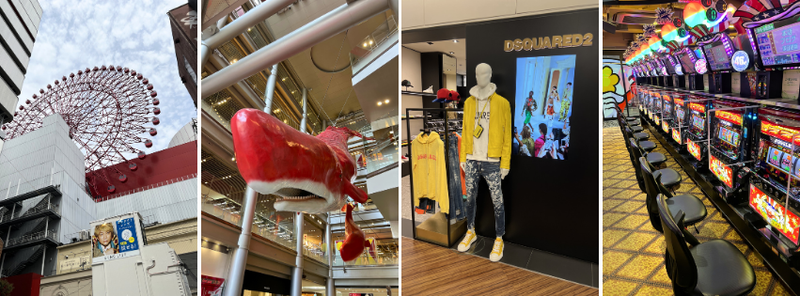
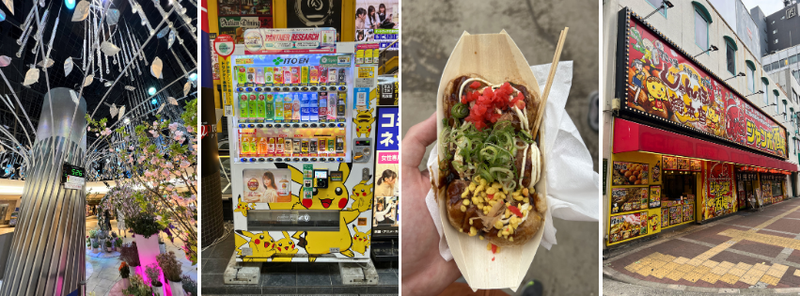
HEP Five is a shopping centre known for the red Ferris wheel on its roof, and inside it has a sculpture of a red whale hanging from the ceiling. The whole place is slightly quirky, which is honestly totally my style. But it is not just a shopping centre: inside there are also arcades, photo booths, gashapon machines and many shops for anime and manga fans. Yes, really totally my style.
The Ferris wheel on top of the roof is one of the best-known features of Umeda. And not only do you enjoy the view of Osaka during the ride – every cabin also has a Bluetooth connection, so you can listen to your favourite music the whole time (or organise karaoke with a view). Food and drink are not allowed in the cabins.
- 💴 Price (for the Ferris wheel): ~600 ¥ (Klook is sometimes a bit cheaper)
- 🕒 Opening hours: 11:00–22:45, no reservation needed
- ⏳ Ride time: 15 min
⛩️ Osaka Tenmangū
After several hours of fun in the arcades and checking out extra outfits, I headed to a more authentic Japanese experience. If you have already seen several temples and shrines on your trip, you can skip this stop without worry – shrines are quite similar to each other and there is often no need to visit every one in every city (unless you do it for religious reasons).
From HEP Five I was at Higashi-Umeda station within a few minutes, and took the metro one stop east (exit station: Minami-Morimachi Station).
Osaka Tenmangū is a Shinto shrine dedicated to the god of learning, Sugawara no Michizane. It is very popular with students (for success in exams and good opportunities). The shrine is not huge, but it has a very local atmosphere. Fewer tourists, more locals — which I really liked. You don't need a lot of time here, but it is a nice contrast to the chaos of the rest of Osaka.
- 💴 Price: free
- 🕒 Opening hours: 9:00–17:00, no reservation
- ⏳ Recommended time: 30–45 min
🏯 Osaka Castle & park
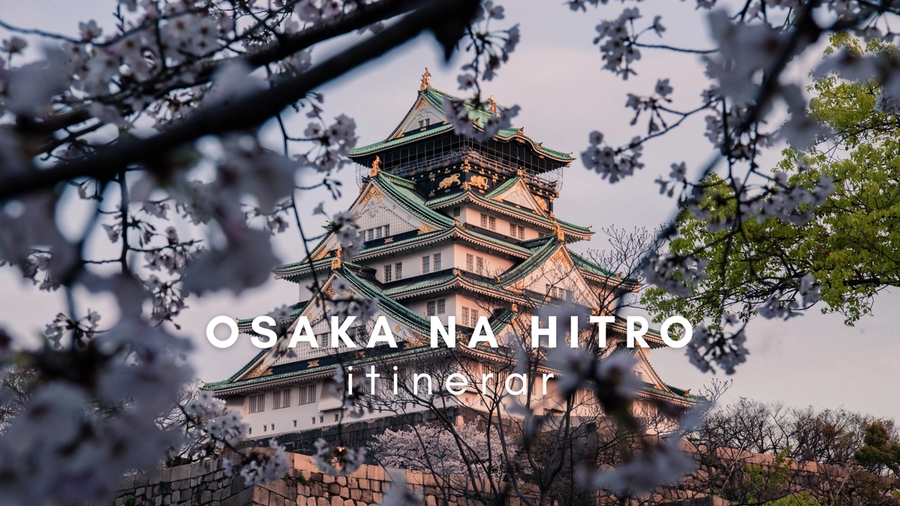
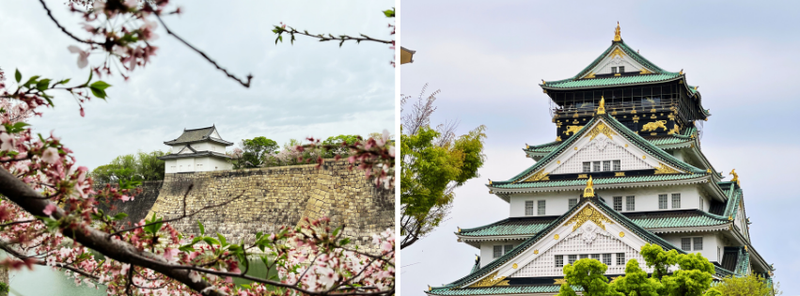
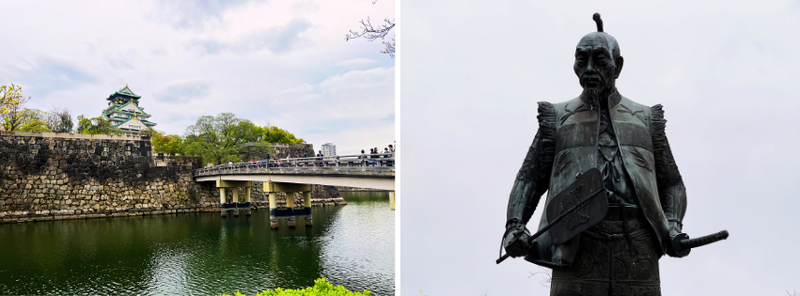
Osaka Castle is one of the best-known castles in Japan. The castle was built in 1583 by Hideyoshi Toyotomi (who was also a samurai, btw), one of the most important leaders in Japanese history. Since then it has been burned down, bombed and destroyed several times, and then rebuilt, most recently in 1931.
The park around the castle is huge, so expect quite a bit of walking. If you have time and good company, you can also have a little picnic somewhere around the castle (during cherry blossom season especially, it is a really lovely experience).
Inside the castle there is a museum, and from the top you get a really nice view over Osaka, but honestly I didn't go in, because I had another castle visit planned (later, in Hiroshima). The queue for the museum is always huge, so I recommend buying tickets through Klook, where they have a “skip the line” option.
- 💴 Price: the park is free, castle tickets are approx. 600 ¥ (Klook, so you don't wait in line)
- 🕒 Opening hours: 9:00–17:00 (until 18:00 seasonally)
- ⏳ Recommended time: 1.5–2.5 hours
🌇 Umeda Sky Building (end of the day)
In the afternoon it was time to head back towards where my hotel was (Umeda).
From Osaka Castle I walked to the far eastern edge of the park, to Ōsakajōkōen Station, and took the JR Loop Line 4 stops (approx. 10 minutes) anticlockwise – to Osaka station. From there, a 10-minute walk awaited me to the next truly iconic sight – the Umeda Sky Building
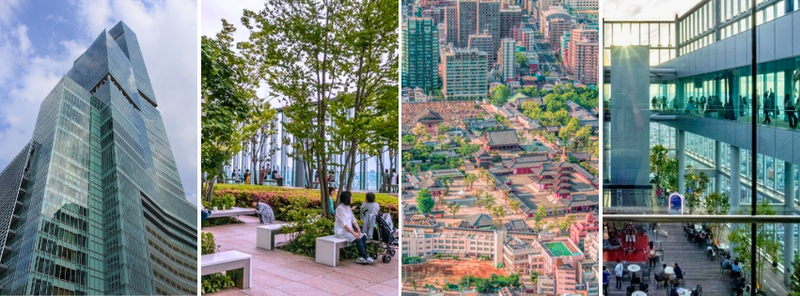
It is a truly unique building, 173 metres tall, with a distinctive “floating garden” observatory - one of the best views in Osaka. It is great if you can come around sunset and see all the incredible colours and the lights coming on at night (of which Osaka has countless). Really, really magical.
- 💴 Price: ~1,500 ¥ (Klook is often cheaper)
- 🕒 Opening hours: 9:30–22:30, no reservation
- ⏳ Recommended time: 1–1.5 hours
🛒 Super Tamade
Before heading to the hotel I wanted to buy some more food - during the whole trip around Japan I most often had dinner right in the hotel: before going back you stop at a konbini, buy food and eat it in your room. And in Osaka, instead of a konbini, I had to try Super Tamade.
It is a very special discount store that exists nowhere else in Japan except Osaka. The shops are spread all over the city, so you can fit one in anywhere in your itinerary. But why is it so special?
At Super Tamade the prices are ridiculously low. You can get a meal for as little as 300-600 ¥, which is less than one euro. They also often organise ¥1 sales, where literally anything in the shop costs 1 yen. From a packet of crackers to a bowl of udon noodles. Even if you are not on a low-budget trip, this is somewhere you go for the experience. The shop is insanely well stocked and you often just stare at what on earth you are even holding, but it really is a unique experience.
Day 2: a whole day in Osaka (but in the hotel haha)
To be completely honest – the itinerary below stayed only on paper. That day the weather ruined absolutely all my plans, since a large part of the sightseeing was planned outdoors and because of the storm I simply couldn't carry out the day as I had imagined. I will still share this itinerary with you, because I think it is well put together and it might come in handy when you plan. I just want to be transparent that I didn't actually see many of the things listed. I did manage to squeeze some of the sights into the following days, when I had other plans as well.
⛩️ Sumiyoshi Taisha: the oldest Shinto shrine
This is the oldest Shinto shrine in Japan, built before the arrival of Buddhism, in the 3rd century. Which means it has no classic curved roofs, no Buddhist influences, and is pure, raw Japanese architecture.
This place is known for being much calmer than the tourist spots in the centre of Osaka. It is often visited by locals, which gives it a more authentic feel.
The shrine protects travellers, fishermen and sailors – so yes, just in case, stop by and sort yourself out a little extra luck for the rest of your trip.
Because it isn't so touristy, there are not many information boards in English here, so it is worth reading up a little beforehand. Morning is the best time to visit, since the light is soft and the atmosphere even calmer. Cash still comes in handy for smaller shrines and offerings. Most bigger cities already accept cards as normal, but at places like this you never know.
- 💴 Price: free
- 🕒 Opening hours: 6:00–17:00, no reservation needed
- ⏳ Recommended time: 45–60 min
🏙️ Abeno Harukas – skyscraper
Approx. 20 minutes by tram back north to Abeno Harukas.
This is the tallest skyscraper in Japan – 300 metres. It has everything: a hotel, an art museum, a huge department store, and at the top (floors 58–60) an observation deck. The deck is divided into several levels, with large glass walls and open spaces.
People often say the view is more “open” than at the Umeda Sky Building, because you are higher up and can see further. In good weather you can see very far, even to the mountains.
It is not as “dramatic” as Umeda at sunset, but it is a cleaner, panoramic view. The best time is in the morning or early afternoon, when visibility is best. If you go at sunset, expect more people. Tickets are often cheaper on Klook, especially in combination with other attractions.
- 💴 Price: ~1,800 ¥ (Klook is often cheaper)
- 🕒 Opening hours: 9:00–22:00, no reservation
- ⏳ Recommended time: 1–1.5 hours
🛕 Shitenno-ji: oldest Buddhist temple
Just a 15-minute walk away is Shitenno-ji.
Built in 593 - the period when Buddhism arrived in Japan. Shitenno-ji is one of the oldest Buddhist temples in Japan, founded by Prince Shōtoku. The temple has burned down and been rebuilt several times, but its structure and layout remain faithful to the original.
Compared to other temples in Osaka, this one is much more spacious and less crowded.
The complex includes a pagoda, an inner courtyard and a garden. People often say this is one of the few temples in Osaka where you can really feel the history without the crowds.
The contrast between the morning Shinto shrine and this Buddhist temple makes a good mini “history timeline” in a single day.
Entry to the outer part is free, but you pay for the inner complex and the garden. If you are interested in temples, it is worth going inside, otherwise the outer part is also nice for a quick visit. It is best to come earlier in the day, when it isn't crowded.
- 💴 Price: outside free, inner complex: ~300–500 ¥
- 🕒 Opening hours: 8:30–16:30, no reservation
- ⏳ Recommended time: 45–60 min
🎏 Shinsekai: retro, statues and fried food
Another 15 min on foot and you are in Shinsekai - a retro district built in the early 20th century, inspired by Paris and New York. Today it is known for the Tsutenkaku tower and street food.
A colourful, slightly chaotic, a little nostalgic part of the city. Arcades, huge statues, retro vibe. The district is more interesting during the day or early evening than late at night.
Here you have to try kushikatsu – fried food on sticks.
Look up → Tsutenkaku (a 103 m tall tower).
Look down → another portion of street food.
- ⏳ Recommended time: 1–1.5 hours
🎮 Otaku energy & the lion head
Next comes a walk of approx. 10 min to Nipponbashi Denden Town.
Imagine a mini Akihabara from the Tokyo guide.
Manga. Anime. Cosplay. Figurines. Gacha machines. Everything. People say it is less touristy than the Tokyo version, which means better prices and a more relaxed atmosphere.
If you are into anime or gaming, take more time. If not, a short walk is enough. Prices vary - it is worth comparing between shops.
- 🕒 Opening hours: shops approx. 11:00–20:00
- ⏳ Recommended time: 45–60 min, or more for weebs
⛩️ Namba Yasaka Jinja
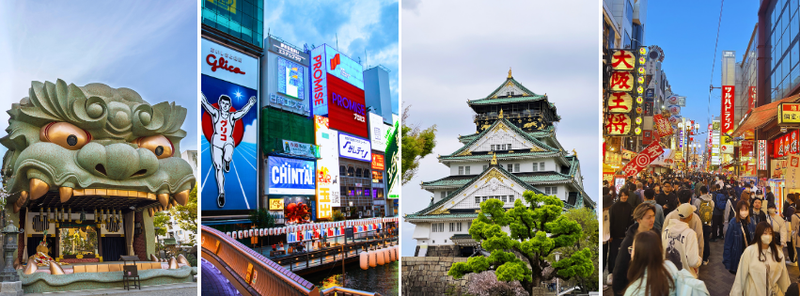
Another 15 min on foot and you reach the most random, epic shrine: shaped like a giant lion head. It is one of the more unusual sights in Osaka. The big lion head is said to “eat bad energy” and bring luck. A quick and unique stop, snap a photo and off we go.
- 💴 Price: free
- 🕒 Opening hours: 24/7
- ⏳ Recommended time: 20 min
👺 (Optional foodie & culture stop)
If you still have energy:
- Kuromon Ichiba Market – street food heaven (especially for non-vegans)
- National Bunraku Theatre – traditional puppet theatre with huge puppets (sometimes they also have performances in English)
🌃 Towards evening: Dotonbori
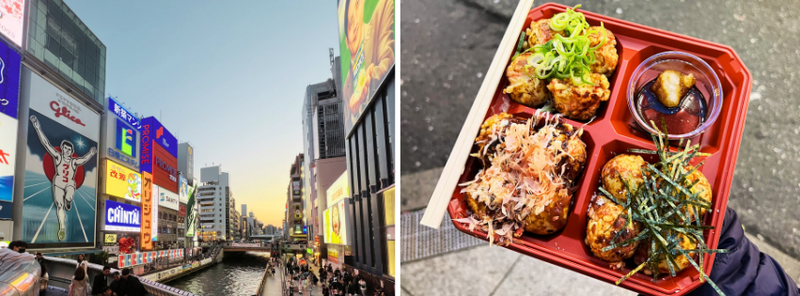
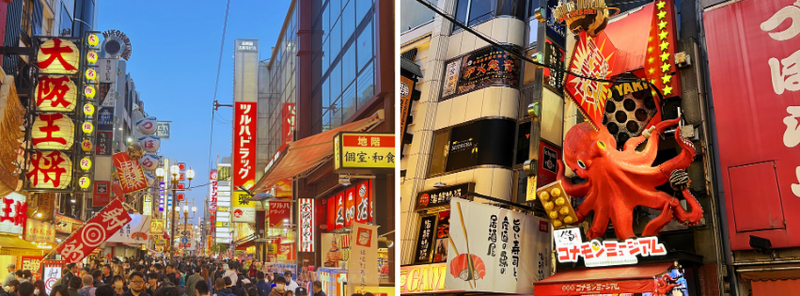
approx. 15 min on foot to Dotonbori. This is the part of Osaka you see in all the photos:
neon signs, giant 3D signs with crabs, fish and ramen bowls, the river, bridges, crowds of people and an endless choice of food. Chaotic, loud and touristy - but at the same time an absolute must-see.
Come in the evening when the lights come on. Try takoyaki or okonomiyaki. A walk along the river is the best way to catch the vibe.
- ⏳ Recommended time: 1.5–2 hours
5 min away:
- Shinsaibashi-suji – covered shopping street
- America-mura – youthful, slightly alternative vibe
PS for the whole day: Street food rule: if there is a queue of Japanese people, it's legit.
This content comes from a third-party provider that may set its own cookies and collect data about your visit. We only load it with your consent. More about privacy
For the next 3 days I was still staying in Osaka, but during the day I visited other places in the surrounding area. I also wrote a blog post about each of these places, so I invite you to read them:
🎢 Day 3: Universal Osaka and everything you need to know
🦌 Day 4: Day trip - Nara
🏞️ Day 5: Day trip - Kobe
Osaka street food guide: what you have to try
And to finish, a short (🚨 non-vegan) street food guide:
🐙 Takoyaki – The most typical street food in Osaka. These are small balls of batter filled with pieces of octopus, cooked on a special plate and topped with okonomi sauce (similar to BBQ sauce, only with a less smoky flavour), mayonnaise and bonito flakes. Slightly crispy on the outside, almost liquid on the inside. And they are served very hot. Most people make the same mistake and bite too quickly 😄
🥞 Okonomiyaki - A thick savoury pancake with cabbage, meat or seafood, cooked on a griddle. It is more of a “comfort food”. Soft, filling and full of flavour. They often prepare it in front of you or you flip it yourself. On top it is served similarly to takoyaki: drizzled with okonomi sauce, mayonnaise and bonito flakes.
🍢 Kushikatsu - Various ingredients (meat, vegetables, cheese) skewered on a stick and deep-fried. Crispy, greasy and something you nibble on with a beer. This is typical food from the Shinsekai district. Important rule: no double dipping! The Japanese are sensitive about this.
🧀 Korean cheese hotdog - This is more of an “Instagram food”, a deep-fried stick with cheese that stretches when you bite into it. Often sprinkled with sugar — an interesting sweet/salty combination.
🦀 Crab street food - The huge crab signs are not just for decoration; here they actually sell freshly prepared crab. Often on a stick or in tempura form. A little pricier, but a very Osaka moment.
This content comes from a third-party provider that may set its own cookies and collect data about your visit. We only load it with your consent. More about privacy
Welcome
Eva Susin
From cooking workshops to discovering vegan corners around the world — food is my biggest passion and brings all my interests together. If you need inspiration for your next meal, have a browse through the recipes. The content might just give you some cravings 😉