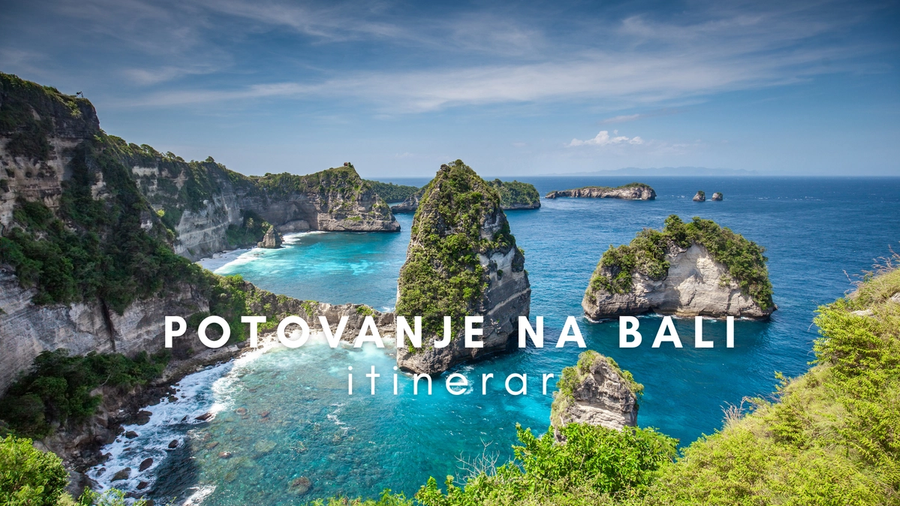
Bali: basic itinerary
This page contains affiliate links. If you buy or book through them I earn a small commission at no extra cost to you. I only recommend things I actually use or would use.
If there is a place where time seems to flow more slowly and where every sunset takes your breath away – it is Bali. An island of rice terraces, surfing, temples and smoothie bowls. In this post I reveal my travel plan for Bali, from practical tips before you leave to a detailed itinerary – everything you need to make the most of Bali the way it deserves.
What do I need to know before going to Bali 🌴
Before you pack your sandals and swimwear, take a moment for a few formalities and practical things:
🛂 Passport and visa
Slovenian citizens need a valid passport to enter Bali (Indonesia), valid for at least 6 months after entry. When your plane lands, you can get a Visa on Arrival (VOA) – a visa upon arrival that is valid for 30 days and can later be extended for the same period again (so 60 days in total). You pay for it directly at Denpasar airport – the price is around 30€ and you can also pay by card. However, since the queues for getting a visa at the airport can be long and slow, I suggest ordering your visa online in advance. That way you can skip the queue after arrival and head off to explore the island faster.
💉 Vaccinations and illness
There are no mandatory vaccinations, but vaccination against hepatitis A, B and typhoid is recommended. Depending on your itinerary and the places you want to visit, you can also buy anti-malarials for extra protection; otherwise, repellents are available everywhere in Bali, and they are an extremely effective protection against mosquitoes.
The biggest “threat” to travellers is the so-called Bali belly – translation: digestive problems caused by bacteria in food or water. It is one of the most common questions I get. As prevention, use bottled water (even for brushing your teeth!) and make sure you don't swallow water while showering. Most accommodations have water dispensers, which are safe. In restaurants and bars, judge for yourself what the hygiene standards look like and, if necessary, avoid ice in drinks and raw vegetables in more dubious places.
💰 Currency and payments
The currency in Bali is the Indonesian rupiah (IDR).
The most convenient way is to withdraw money from ATMs located along main roads (not in mini-markets or back streets). General recommendations are banks like BCA or Mandiri.
Cards (Visa, Mastercard) are accepted in all the larger towns and in most cafés and accommodations, but they usually charge an extra 3-5% for paying by card. That isn't a lot, but if you travel for a longer time and those percentages add up with every meal, you can end up spending quite a bit more than necessary by the end of the trip. I recommend always carrying some cash with you – especially for meals at smaller warungs or at markets.
☀️ Weather in Bali
Bali has two seasons:
- Dry season (May – October): the most popular time to visit, sunny, fewer mosquitoes, ideal for surfing and exploring. Expect more tourists and higher accommodation prices.
- Rainy season (November – April): afternoon showers, but still warm and lush green – perfect for those who want fewer tourists, remote work and lower prices.
💡 Tip:
The southern and western parts (Canggu, Uluwatu, Nusa Dua) usually get less rain than the interior (Ubud).
If you travel after New Year, take a rain jacket, as unpredictable showers are common. But don't worry, the rain is warm and passes quickly. Temperatures are around 30°C all year round, but in the rainy season the air is more humid.
🛵 Getting around Bali
🚗 International driving permit
If you want to drive a scooter or car, you need an international driving permit, which you can get in Slovenia at AMZS (the Automobile Association of Slovenia).
Without it, the police can fine you.
🛵 Scooter or car?
For most travellers, a scooter is the best way of getting around.
The roads are narrow and you often ride along paths that even Google Maps can't find. In the bigger towns (Canggu, Uluwatu, Ubud) there is a huge amount of traffic, but with patience and slow riding it works. If you're afraid of riding – don't worry! There are the Gojek and Grab apps, with which you can order a driver (like Uber, only on scooters). Locals are used to the traffic and find their way through the crowds well, and the ride is extremely cheap (even under 1€, depending on the kilometres).
You can rent a scooter almost anywhere, but I recommend renting in Canggu or Ubud, where there are reliable providers. Price: around 5–7 € per day.
💡 Tip: On Google Maps always check the walking route – the app often sends cars along roads that are closed to motorbikes.
This content comes from a third-party provider that may set its own cookies and collect data about your visit. We only load it with your consent. More about privacy
🗓️ Travel plan for Bali
A classic itinerary for a first visit to Bali, to experience a bit of everything – beaches, temples, nature and island atmosphere – includes the following places:
- Arrival in Denpasar
- Uluwatu
- Nusa Lembongan and Nusa Penida
- Gili Islands
- Ubud
- Canggu
This is the most popular loop through the main towns, which you can also do in the opposite direction (Canggu – Uluwatu). If you have more days available, add Amed in the north-east or Seminyak in the west to your itinerary.
🛬 Denpasar – first contact with Bali
Your plane will land in Denpasar (DPS). Depending on your arrival time and the number of days you have, you can spend the first night near the airport (in Jimbaran or Kuta) to rest after the flight and adjust to the time difference, or you can hire a taxi to take you to your first destination. If you have limited time for the trip, it is best to continue straight on to Uluwatu or Canggu, depending on where you want to start your adventure.
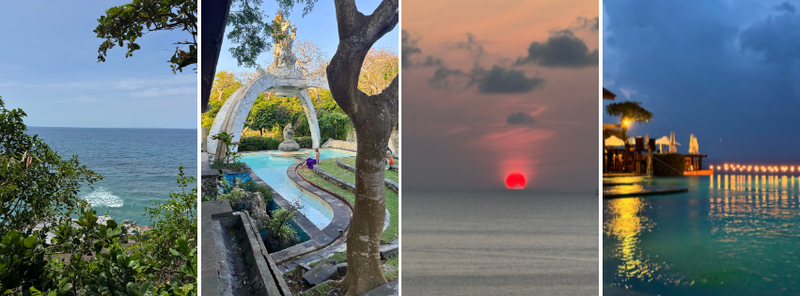
🌊 Uluwatu
Uluwatu is synonymous with dramatic cliffs, surf spots and a temple with a view. What to do?
- Transport: this is a developed enough town that you can get around it entirely by ride-hailing like Gojek and Grab. A sort of Uber, but the driver picks you up on a scooter and it is incredibly cheap. They will take you practically anywhere, at least as long as you have internet to order your ride. I would still say a scooter is worth getting – at least for those of you who enjoy riding. Distances are short, but hilly and extremely pleasant to ride at your own pace.
- Activities: Surfing (also for beginners); yoga, meditations and gong therapies – Uluwatu has loads of places to pamper your body and mind, and prices are extremely low too; massages – affordable and especially pleasant after a long flight.
- Uluwatu Temple (Pura Luhur) – one of the holiest temples in Bali. I recommend visiting at sunset, and every evening there are also two time slots to watch the Kecak fire dance – a traditional dance. It is one of those tourist classics, so that we get a bit closer to their tradition and culture. You can buy the ticket on site, but in high season the sunset slot sells out quickly, so I recommend buying online, or arriving a few hours before the performance to make sure you get in.
- Beaches: Padang Padang (a small, cinematic beach from the film Eat, Pray, Love), Bingin and Dreamland beach (for surfing and sunsets)
- Sunset spots: Visit Uluwatu beach, where there is a huge cliff with bars and restaurants perfect for watching the sunset. The most popular places are Single Fin bar or El Kabron Beach Club, but seats fill up quickly, so I suggest arriving a few hours early and reserving yourself a perfect spot.
This content comes from a third-party provider that may set its own cookies and collect data about your visit. We only load it with your consent. More about privacy
☕ Breakfasts and warungs
The Cashew Tree: modern breakfast with top vegan options.
Warung Bejana: home-style Indonesian food with a view of the ocean.
Bukit Café: crazy smoothie bowls, matcha and poke bowls on the south-west coast.
Drifter Café: for lovers of coffee, avocado art and surf culture.
The Warung: a restaurant inside a modern resort, where they prepare traditional food in an upscale way.
The Alchemy: a vegan restaurant with a huge menu and a pleasant ambience.
This content comes from a third-party provider that may set its own cookies and collect data about your visit. We only load it with your consent. More about privacy
This content comes from a third-party provider that may set its own cookies and collect data about your visit. We only load it with your consent. More about privacy
🐢 Nusa Lembongan & Nusa Penida
Nusa Penida, Nusa Ceningan and Nusa Lembongan are three small islands east of the main island of Bali. You get there by fast boat or ferry from Sanur harbour. Tickets for the crossing can be bought online – click. Keep in mind that the standard in Bali is different from ours and the ride may not be so comfortable. Check reviews online before choosing a provider, and if you tend to get seasick, I recommend not skimping and rather paying a euro or so more for a more comfortable ride.
As soon as you arrive you feel a more island-like energy: there are no big towns here, more like little villages, and far fewer roads too. To get around the islands you definitely need a scooter, because there are no ride-hailing apps like Grab and Gojek here. We rented the scooters directly at our accommodation.
Nusa Lembongan is the westernmost island – it is calmer, with more “civilisation”, accommodation, restaurants and hotels. We decided to stay overnight on this island, the next afternoon we also visited the neighbouring island of Nusa Ceningan, which you can reach by scooter, and the following day we went on a day trip to Nusa Penida. Nusa Penida is known for its paradise beaches and wild nature – here we definitely saw some of the most beautiful views of my life, though it is true that these beaches are always surrounded by tourists and the waves are often too strong for swimming. There really are loads of beaches, so prepare a plan in advance of which beaches you want to see – tourists usually see either all the beaches in the west or all the beaches in the east, as there isn't time for both. We only saw two beaches, as they are at opposite ends of the island and we ran out of time for anything else, since we had to catch the last boat back to Nusa Lembongan.
Nusa Penida also has accommodation and restaurants, so if you have the time and desire you can stay overnight here too and see all the beaches around the island in two days. Then you take a day trip to Nusa Lembongan.
This content comes from a third-party provider that may set its own cookies and collect data about your visit. We only load it with your consent. More about privacy
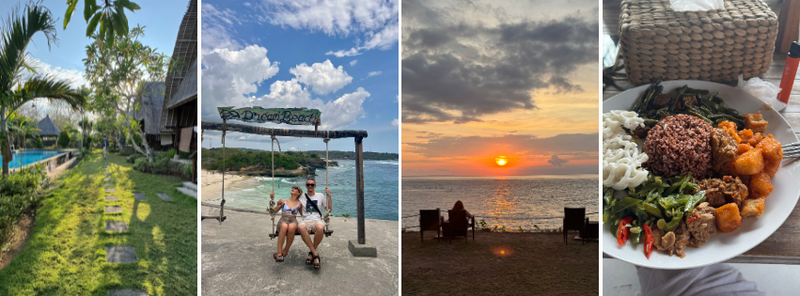
What to do – Nusa Lembongan
- Devil’s Tear: a natural pool where waves crashing against the rocks create mighty geysers of seawater up to 10 metres high – a spectacle you must not miss (most beautiful at sunset).
- Dream Beach: a small, paradise beach with turquoise water and soft white sand – ideal for swimming, snorkelling or photos. Right next to the beach is Dream Beach Huts Café, perfect for a coconut and a rest in the shade.
- Mushroom Bay: the most popular beach on the island, with well-kept cafés, restaurants and a starting point for boat trips.
- Mangrove Forest: in the north-east of the island, where you can rent a canoe or boat and paddle through the quiet, mysterious world of the mangroves – perfect for morning peace.
- Sunset Point: a panoramic spot above the cliffs in the west, where the sun sinks into the ocean – a must-stop at the end of the day, with a juice or a Bintang beer in hand.
This content comes from a third-party provider that may set its own cookies and collect data about your visit. We only load it with your consent. More about privacy
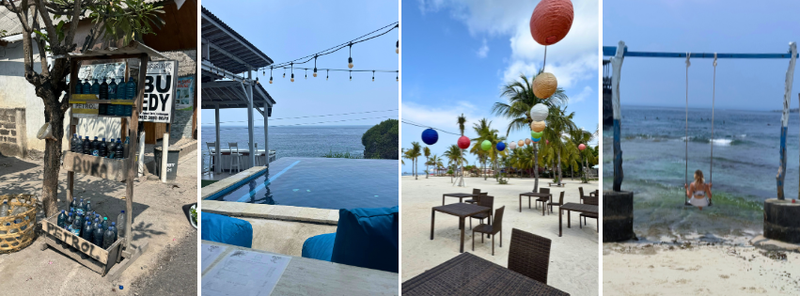
What to do – Nusa Ceningan
- Blue Lagoon: an incredible view over a deep turquoise bay – one of the most photogenic spots in Bali (careful: swimming here is not safe, but the view is stunning).
- Mahana Point: a viewpoint bar on the edge of a cliff, where the brave can jump into the sea from a 10-metre cliff – and then back to a smoothie or cocktail.
- Secret Beach: a lesser-known but wonderful beach with a calm ambience and white sand, perfect for a lazy afternoon.
- Ceningan Cliff Restaurant: a boho bar with an infinity pool and a view of Nusa Penida and the endless ocean – one of the best brunches with a view.
- Driftwood Bar: a beach bar with a relaxed atmosphere, an infinity pool and a stunning sunset view. In the evening they turn on the music and candles and create that perfect “island vibe” – ideal for a cocktail or dinner after exploring the island.
- Abyss Zipline: an adrenaline attraction where you glide over cliffs and a turquoise lagoon. It costs around 8€ and is short but unforgettable, with a view that takes your breath away.
This content comes from a third-party provider that may set its own cookies and collect data about your visit. We only load it with your consent. More about privacy
What to do – Nusa Penida
Nusa Penida is the biggest and most spectacular of the “Nusas”. The island is a paradise for explorers who want more than just beaches – here you find cliffs, hidden temples, bays and waterfalls that take your breath away.
Below you will find a list of the best-known and recommended spots – I suggest looking them up on Google Maps and, depending on your travel time, putting together your own itinerary of what you want to see.
Western part:
- Crystal Bay: an excellent beach for snorkelling and sunsets.
- Broken Beach: a natural amphitheatre with a ring of rocks and a turquoise lagoon in the middle.
- Angel’s Billabong: a natural pool where you can swim at low tide (check the tides!).
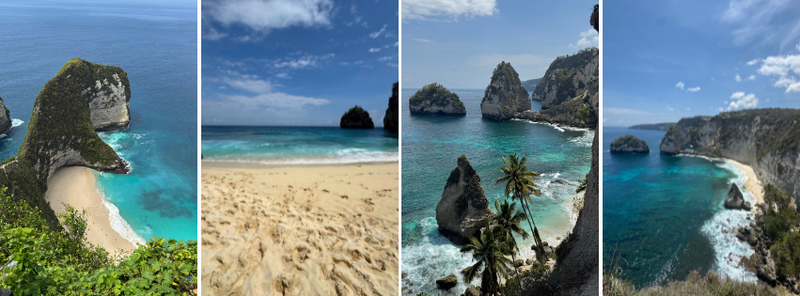
- Kelingking Beach: the best-known beach and the iconic “T-Rex” cliff – the view you see on every postcard. This is a beach I also saw myself, and I have to say the view from the top is truly stunning. The descent to the beach is steep, so if you don't have suitable footwear, better not to go down. Keep in mind that after every descent you have to come back up too, so make sure you have enough time, water and sun cream.
- Banah Cliff Point: a lesser-known viewpoint with a natural “stone ring” in the ocean.
- Tembeling Beach & Forest: a hidden beach reached by a jungle path – along the way there are natural pools for swimming.
- Toyapakeh Beach: a calm beach and an excellent starting point for diving.
Eastern part:
- Peguyangan Waterfall: a holy waterfall in the interior of the island, which you can stop at on the way. A blue staircase along the cliff leads down to it.
- Atuh Beach: a perfect bay for swimming, surrounded by natural rock arches.
- Rumah Pohon Tree House: a well-known tree house with a view over the bay – a wonderful spot for sunrise.
- Diamond Beach: one of the most beautiful beaches in Bali, with steep steps carved into the cliff. This is the second beach I saw in person myself, and here I also went all the way down to the actual beach. The steps are steep and often crowded with tourists, but at the bottom a paradise beach and a luxurious view await you. On the way there is also a swing, where girls can borrow a dress and take some Instagrammable videos or photos.
- Suwehan Beach: a hidden gem of the east coast. A long path down steep steps leads to it, but when you get down, perfect peace awaits you, turquoise water and the iconic rock formation “Jineng Stone” rising from the sea. It is most beautiful in the morning, when the sun is still low and the water shimmers in blue-green shades.
This content comes from a third-party provider that may set its own cookies and collect data about your visit. We only load it with your consent. More about privacy
🐠 Gili Islands
Gili Air, Gili Trawangan and Gili Meno are three small islands that are technically no longer in Bali but belong to Lombok. This means that the locals are mostly Sasak – an ethnic group that follows Islam, unlike predominantly Hindu Bali.
Five times a day you hear the call to prayer from the shore, weaving together with reggae music from the beach bars.
Despite that, the atmosphere is relaxed and open – the locals are extremely friendly, smiling and curious, used to travellers from all over the world.
Fast boats run every day between the Gili Islands, Nusa Penida and Bali. The most reliable providers are BlueWater Express and Eka Jaya Fast Boat. It is best to book your ticket in advance or through your accommodation.
One of the first things you'll notice on the Gili Islands is the cats – they are everywhere!
Friendly, relaxed and mostly tailless – a feature typical of this area. Locals consider them bringers of luck, so you often see them sunbathing on the beach or dozing in cafés.
There are no motor vehicles on the Gili Islands – that is the law. You can only get around by:
- Bicycle – the most fun and common way; rental costs around 50,000–75,000 IDR per day.
- Cidomo – a traditional horse-drawn cart for shorter trips or luggage (if you care about animal welfare, choose a bike instead).
- On foot – all three islands are small; you can walk around Gili Air in an hour, Gili Trawangan in two.
This content comes from a third-party provider that may set its own cookies and collect data about your visit. We only load it with your consent. More about privacy
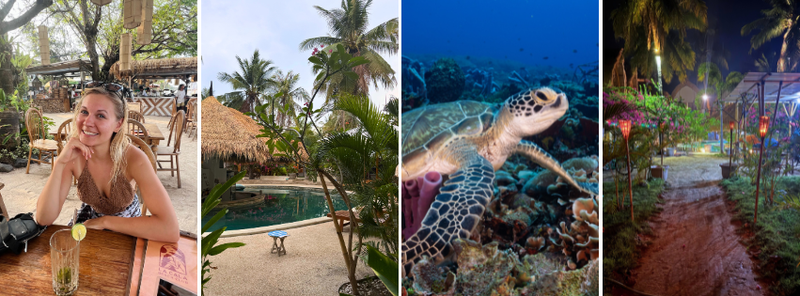
💡 Tip: At night take a torch or use your phone – the paths are sandy and often without street lighting.
Gili Trawangan, or simply Gili T, is the biggest and liveliest of the three. It is known for its beaches, dive schools and evening life, but it has a calmer side too – in the north of the island you'll find corners of quiet and peace.
Gili Air is somewhere in between – it has just the right amount of energy, but at the same time a relaxed pace. It is loved by yogis, divers and those looking for authentic contact with nature and the locals.
Gili Meno is the smallest and calmest – like stepping into another world. No crowds, no loud music, just the whisper of the sea, swaying palms and the smell of the sea. Ideal for couples, artists or anyone looking for a perfect disconnect.
What to do – Gili Islands
- Snorkelling: along the main road there are loads of stalls offering snorkelling packages – they differ in group size and trip length. Of course you can also book the experience online – click for the link. The locals pick you up on the shore, provide all the equipment, and then take you to the best spots for watching marine life
- Diving: the Gilis are an excellent starting point for diving, even for beginners. I dived with Gili Divers, who offer loads of courses, both for people diving for the first time and for experienced divers. I took part in a dive for complete beginners, where they first explained everything in theory, then showed us in practice in the pool and made sure we all knew how to handle the equipment, and then they took us out to sea, where we explored the ocean together with the instructors. After the trip they also showed us which animals we had seen and explained some of their special features. A top experience that I can't praise enough.
- Night market: every evening by the harbour – fresh grilled fish, nasi goreng and fresh juices at affordable prices.
- Morning yoga: On Gili Air you'll find H2O Yoga Center or Flowers & Fire Yoga Garden for relaxing and stretching under the palms.
- Cooking class: learn to prepare Indonesian dishes at Gili Cooking Classes.
This content comes from a third-party provider that may set its own cookies and collect data about your visit. We only load it with your consent. More about privacy
This content comes from a third-party provider that may set its own cookies and collect data about your visit. We only load it with your consent. More about privacy
🌿 Ubud – the spiritual heart of Bali
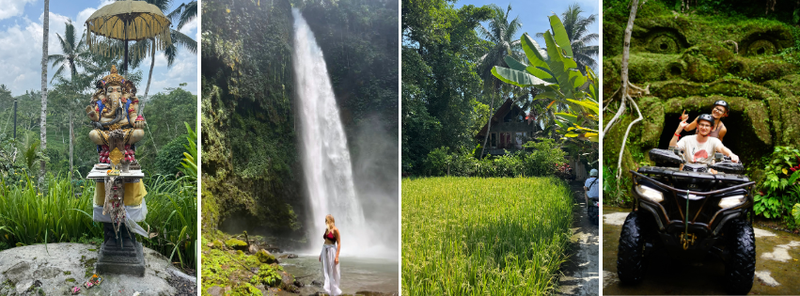
Amid rice fields, palms and waterfalls, ancient culture and a modern wellness spirit meet here. Ubud is the cradle of Balinese art, spirituality and tradition. The streets are full of galleries, temples, markets and the scent of sandalwood.
Locals still prepare canang sari every day – small offerings of flowers and incense, which they place on thresholds and altars.
In the centre of town, artists, travellers, yogis and digital nomads meet. And yet Ubud keeps its authenticity – here cosmopolitanism and tradition blend wonderfully.
This content comes from a third-party provider that may set its own cookies and collect data about your visit. We only load it with your consent. More about privacy
What to do – Ubud
- Tegalalang Rice Terraces: iconic rice terraces bathed in morning mist. Most beautiful at sunrise – and with fewer crowds. Here you can get loads of breathtaking photos and videos, and you can also visit one of the many viral swings or boho cafés with a view of the rice fields.
- Cooking workshops: Take part in an Indonesian cooking class – you start at the local market, get to know the spices, and then prepare traditional dishes.
- ATV ride: An adrenaline adventure through the jungle, rice fields and muddy tracks – Bali Quad Adventure Tours organises the safest and most fun tours. Lunch is included in the price – after the ride you head to a lovely spot in the rice fields, with an infinity pool, where you breathe in the fresh air, eat a warm meal and sip a cocktail.
- Silver ring making: another unique activity, where you make a ring from real silver yourself – a wonderful souvenir of Bali. There are loads of providers and you can book the experience online – click. When you arrive, you first choose your ring design, and then a mentor guides you through the entire making process.
This content comes from a third-party provider that may set its own cookies and collect data about your visit. We only load it with your consent. More about privacy
- Yoga and meditation: The two most beautiful studios on the island are The Yoga Barn (a legendary complex in the middle of nature) and Radiantly Alive. The schedules include yoga, sound baths, breathwork and even ecstatic dance.
- Bars with pools:
- Tis Café: a lovely bar, café and restaurant, with an infinity pool and a view of the rice fields.
- Folk Pool & Gardens: a pool in the centre of Ubud, great for a lazy afternoon.
- Jungle Fish: a bar with a stamp of luxury – a pool with a view of the jungle and a perfect lunch with fresh juices.
- Ubud Market: here you'll find handmade bags, clothes, spices, coconut oil and traditional souvenirs – don't forget to haggle! Haggling is part of Balinese culture and you can usually bring the price down by more than 50% from the original.
- Ubud Monkey Forest: a sacred forest with 700 macaque monkeys. Pro tip – put your sunglasses away in your bag and hold your phone tightly in your hand – the monkeys are excellent thieves!
- Tirta Empul Temple: a holy spring where locals perform a purification ritual – join in if you want an authentic spiritual experience.
- Saraswati Temple: dedicated to the goddess of knowledge and the arts, with a pond full of lotuses.
- Campuhan Ridge Walk: a scenic path through hills and rice fields – ideal for a morning walk.
- Goa Gajah (Elephant Cave): a 9th-century temple with carved stone faces.
This content comes from a third-party provider that may set its own cookies and collect data about your visit. We only load it with your consent. More about privacy
This content comes from a third-party provider that may set its own cookies and collect data about your visit. We only load it with your consent. More about privacy
🏄♀️ Canggu
Canggu is like Bali's hipster paradise – a place where digital nomads, surfers, artists and open-hearted travellers meet.
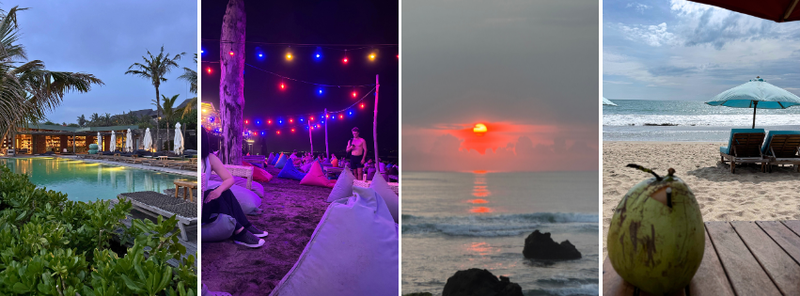
It has everything that defines modern Bali: coffee, yoga, beach bars, vintage shops, sunsets and waves.
What to do – Canggu
- Surfing: The most popular spots are Batu Bolong (for beginners), Echo Beach and Berawa Beach. Surf schools are at every step – lessons cost around 20–25 €.
- Beach bars and clubs:
The Lawn: a legendary beach club for sunsets, cocktails and DJs. - La Brisa Bali: a boho paradise with hammocks and wooden bungalows by the beach.
- Finns Beach Club: more glamorous, with pools and live music.
- Old Man’s: a classic on Batu Bolong beach – beer, good company and a “sand-between-your-toes” vibe.
- Vault Nightclub: an underground club with techno rhythms.
- Black Sand Brewery: craft beer and relaxed hanging out.
- Pretty Poison: a bar with a skate ramp – alternative, fun and always full of locals and travellers.
- Love Anchor Market: a daily market with handmade products and vintage clothes.
- Samadi Sunday Market and La Brisa Sunday Market: organic food, local products, eco vibe.
- The Shady Shack – vegan food by the rice fields, one of the best ambiences in Canggu.
- Motion Café – small but full of tasty fit dishes and fresh juices.
- TYGR Canggu – a Japanese restaurant with excellent vegan options.
- Rise & Shine – for a morning espresso before surfing.
This content comes from a third-party provider that may set its own cookies and collect data about your visit. We only load it with your consent. More about privacy
🌺 If you stay longer in Bali …
If you fall in love with Bali, as I did, you soon realise that a few days is simply not enough.
Many travellers come “for ten days” and stay for months – some even for good.
The island slowly embraces you: with the smiles of the locals, the smell of incense, music at sunset, morning surf waves and the feeling that there is never any need to hurry.
When you start moving more like a “local” than a tourist, you discover a completely different side of Bali – less Instagram, more real moments: breakfast in a little warung, buying a mango at the market, a stroll along the rice paths, tea in the rain and coffee with new friends.
💡 Tip for longer stays:
If you stay more than 30 days, you can easily extend your Visa on Arrival (VOA) on the spot or through a travel agency (an additional 30 days).
Many digital nomads take advantage of the Social-Cultural visa, which allows a stay of up to 6 months.
🍽️ The Hungry in Bali app – your guide to the best corners
Once you have been in Bali for a longer time, you start looking for hidden places, good deals and authentic experiences that tourists often overlook.
This is where the Hungry in Bali app comes in handy – a digital guide created by local insiders, which brings together the best restaurants, cafés, beach bars, spa centres and activities all over the island. The app works like a personal “food & lifestyle guide” – you can pay a monthly or yearly subscription and use it to get exclusive offers and save money. You can find out more about it at hungryinbali.com or directly in the App Store / Google Play.
Inside the app you'll find:
✅ Exclusive discounts and perks at more than 150 restaurants, cafés, spa centres and boutique shops across Bali (including on Nusa Penida, Lembongan and the Gili Islands). Perks include, for example, free drinks with a meal and in clubs, free local starters with every order, and up to 20% off the whole bill at restaurants, massage and beauty salons.
✅ Local recommendations – verified places, not tourist traps.
✅ Saving time and money – ideal if you stay several weeks and want to explore more and spend less.
✨ In the end …
Bali teaches you one of the most beautiful lessons: that life is not in the rush, but in the moment.
In the smell of fresh rain, in the first sip of coconut water, in a spontaneous chat with a local or in the silence during a sunset.
And when you leave, a part of that Balinese energy will go with you – like an invisible reminder that it is worth stopping and simply being.
Welcome

Eva Susin
From cooking workshops to discovering vegan corners around the world — food is my biggest passion and brings all my interests together. If you need inspiration for your next meal, have a browse through the recipes. The content might just give you some cravings 😉